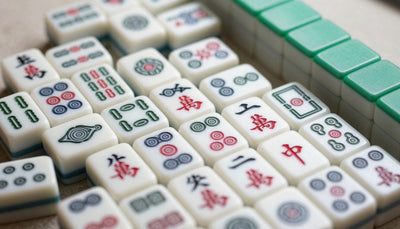
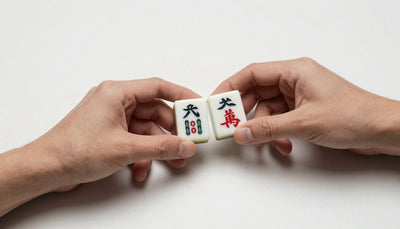
Master the mahjong tile guide to identify every symbol
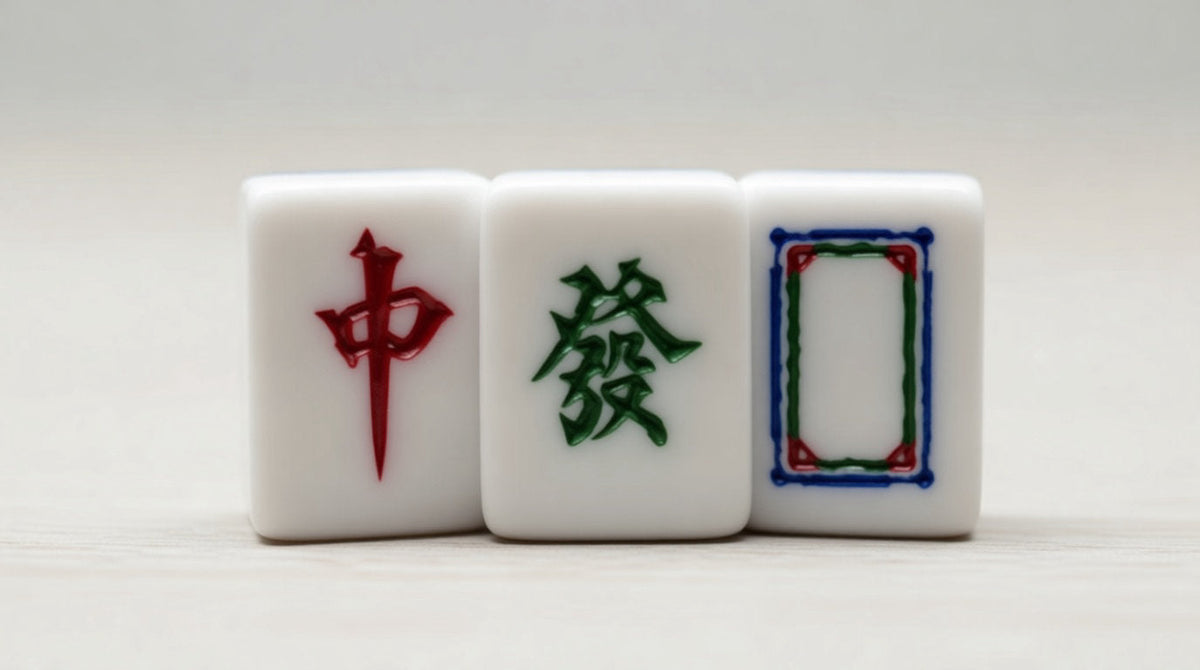
The essential takeaway: Mastering a 144-tile Mahjong set requires identifying three numeric suits, honor tiles, and bonus flowers. This knowledge simplifies complex gameplay into logical patterns for strategic scoring. A key differentiator is the 1-Bamboo tile, which features a unique bird design to prevent tampering, while American sets often include helpful Arabic numerals for beginners.
When you master the mahjong tile guide to identify every symbol, modern players no longer feel overwhelmed by the 144 components found in a traditional set. Identifying each symbol is the first step toward strategic mastery. Our Mahjong Tile Guide: Every Tile Explained provides a clear breakdown of numeric suits, honors, and bonus tiles to simplify your learning process. We will help you recognize visual patterns and understand specific rules like the American Joker swap to improve your game efficiency immediately.
- Master the Mahjong Tile Guide for Numeric Suits to Identify Every Symbol
- How To Recognize Honor Tiles And Dragons?
- Understand Flowers And Joker Tiles
- Tile Set Management And Care
To study them in hand rather than on screen, our mahjong tiles collection shows every style up close.
Master the Mahjong Tile Guide for Numeric Suits to Identify Every Symbol
Mastering a set of 144 tiles feels intimidating at first. However, the numeric suits form the logical backbone. You must learn these first.
Dots and Bamboos Visual Patterns
The Dot suit, or Tong, represents copper coins. These patterns are very easy to count. You can identify values one through nine by simply looking at the circles.
The Bamboo suit, known as Tiao, represents strings of coins. The 1-Bamboo is unique. It features a bird, like a sparrow or peacock, to prevent players from altering the tile easily.
These two suits are intuitive. Symbols match the numerical values directly. This makes them the most accessible tiles for Western players starting their journey.
Character Tiles and Numerical Symbols
The Character suit is called Wan. This term stands for ten thousand. You must memorize the specific Chinese characters for numbers one through nine to play these correctly.
The layout follows a strict visual hierarchy:
- The top character represents the number 1-9
- The bottom character is always the 'Wan' symbol
- Red ink is standard for the 'Wan' character
Beginners should check the corners of the tiles. Many American sets include tiny Arabic numerals there. Use these markers to bridge the gap while you learn the symbols.
Consistency is key. Once you recognize the 'Wan' symbol, the rest follows a predictable pattern. You will soon identify them without hesitation.
Once you can name every tile, the mahjong rules guide shows you what to do with them.
How To Recognize Honor Tiles And Dragons?
Now that the numbers are clear, we move to the "Honor" tiles, which don't follow a sequence but hold significant strategic weight for scoring.
Wind Tiles and Directional Symbols
Winds and Dragons are the "Honors." Unlike suits, you cannot form sequences (runs) with them; they only work in sets of identical tiles (pungs or kongs). This distinction is vital for your strategy.
Identify the four directions: East, South, West, and North. Each has a unique Chinese character that players must learn to distinguish. These characters represent the cardinal points on the board.
"In Mahjong, the prevailing wind dictates the flow of the game and can double your score if matched correctly."
Most American sets include the English initials (E, S, W, N) in the corner for easy identification. This helps beginners quickly recognize each direction.
Dragon Tiles and Color Associations
Describe the three Dragons: Red, Green, and White. In many mahjong sets, the White Dragon is a blank tile or a simple blue frame (the "Soap"). It looks different from the others.
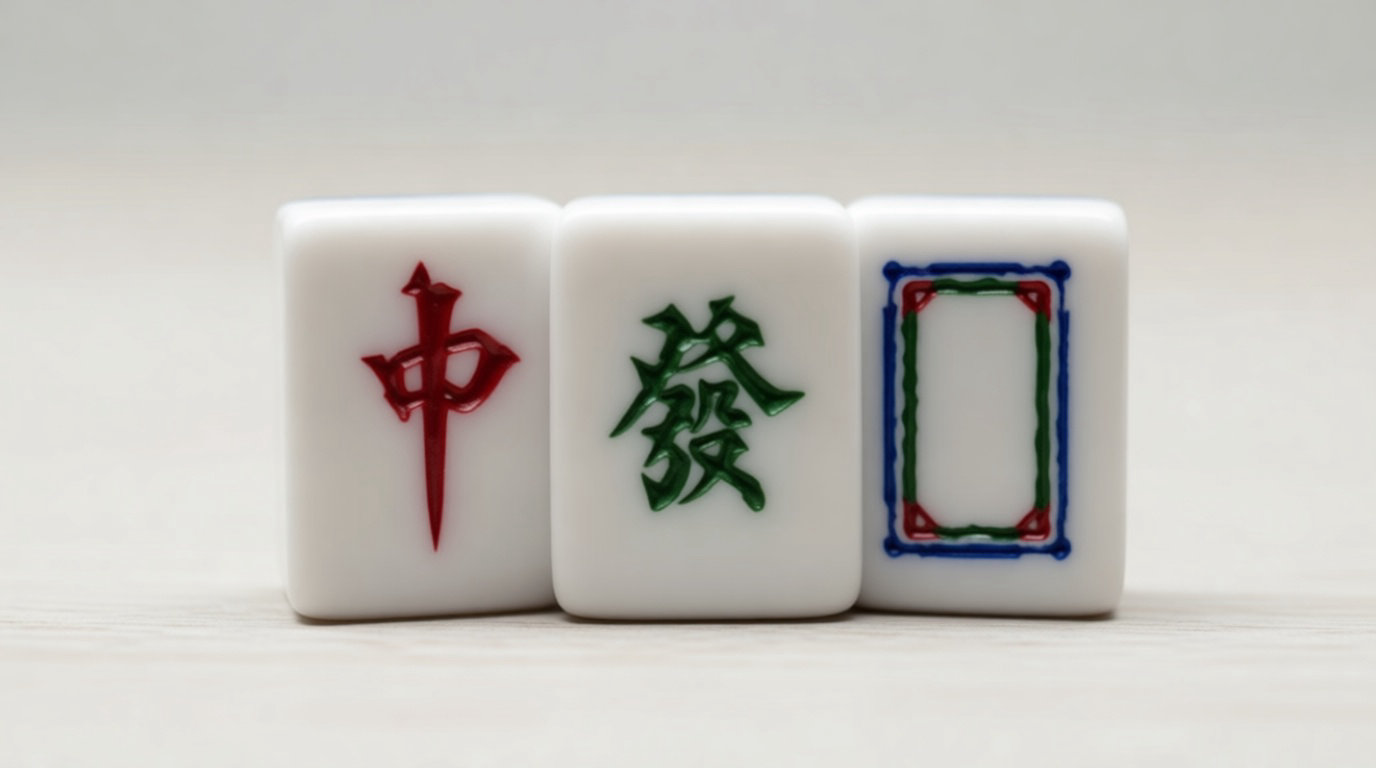
Explain the suit associations. Traditionally, Green goes with Bamboos, Red with Characters, and White with Dots. Understanding the importance of Dragon tiles for points helps in specific advanced scoring combinations.
| Dragon Color | Traditional Name | Visual Symbol | Suit Association |
|---|---|---|---|
| Red | Chung | Red 'middle' character | Characters |
| Green | Fa | Green 'prosperity' character | Bamboos |
| White | Po | Blank or blue frame | Dots (Circles) |
Dragons are high-value targets. Collecting a set of three often grants an immediate bonus point. They are powerful tools for winning.
Understand Flowers And Joker Tiles
Beyond the standard suits and honors, we find the "bonus" tiles that add flavor and, in the American version, the game-changing Jokers.
Seasonal and Botanical Tile Variations
Flower and Season tiles act as luck elements. When you draw one, expose it immediately for a bonus point. Then, draw a replacement tile from the wall to continue. If you need mahjong tiles for your set, replacement mahjong tiles are available for damaged or missing pieces.
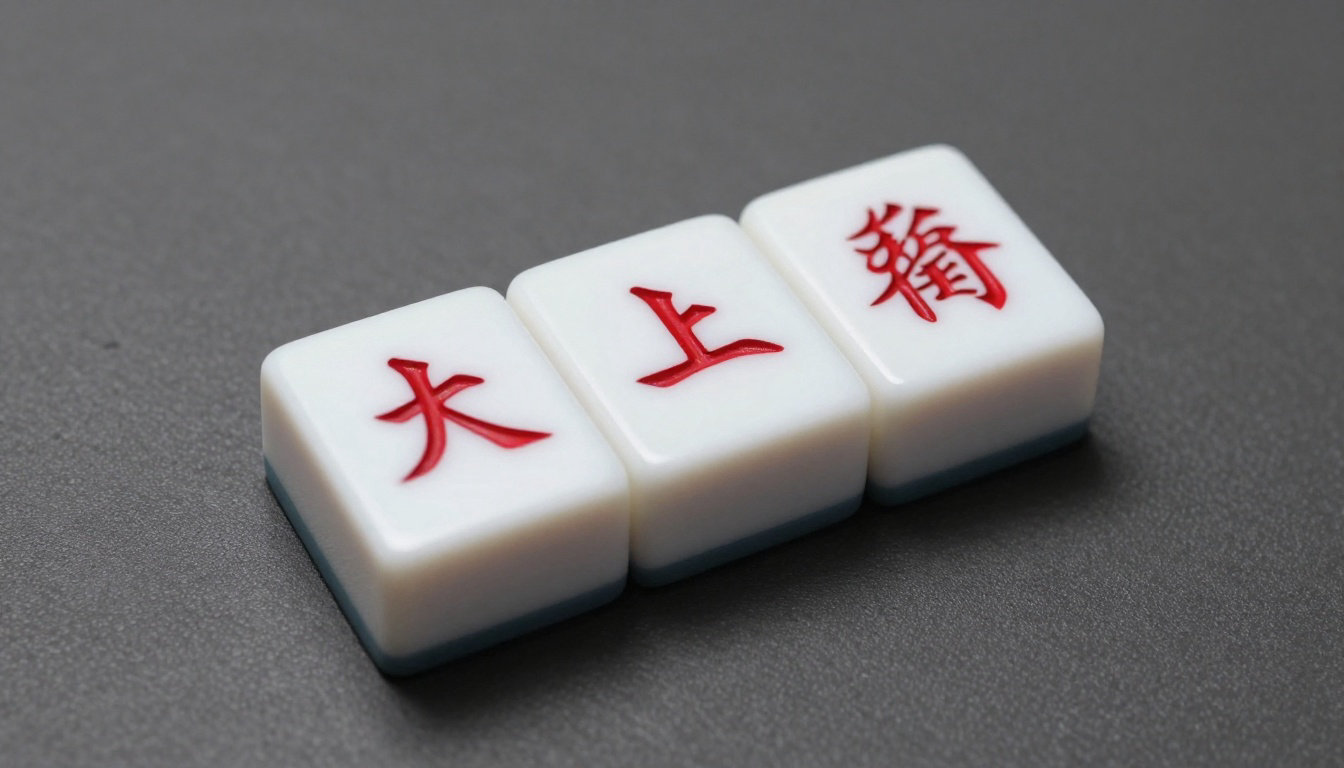
These tiles feature numbers from 1 to 4. Each number links to a specific cardinal direction. For instance, 1 represents East and 2 represents South in certain game versions.
- Flowers: Plum, Orchid, Chrysanthemum, Bamboo
- Seasons: Spring, Summer, Autumn, Winter
Visually, these tiles are the most artistic. They feature intricate, colorful floral designs.
Joker Roles in American Gameplay
The Joker is a wildcard exclusive to American Mahjong. It substitutes for any tile within a grouping. You can use it to complete pungs, kongs, quints, or sextets during your play.
Limitations exist for these wildcards. You cannot use a Joker to complete a pair. They are also prohibited for single tiles required by your hand card.
Joker swapping allows you to trade. If a player exposes a Joker, you can replace it with the real tile. You then add that Joker to your private hand.
Tile Set Management And Care
Owning a beautiful mahjong tile set is only half the battle; keeping it organized and clean ensures your game nights remain professional. You must understand basic combinations like triplets to manage your rack effectively during fast-paced sessions.
Organizing Tiles for Efficient Play
Organize your rack by grouping suits together. Keep potential pairs or triplets side-by-side. This helps you visualize your hand and identify winning patterns faster.
Use clear visual cues for special tiles. Place your Jokers on the far right of the rack. This prevents you from accidentally discarding them during a quick turn. If you play outdoors, waterproof mahjong tiles are ideal for preventing damage.
Sorting tiles immediately upon drawing is a professional habit.
A messy rack leads to a messy mind. Speed up your decision-making by sorting tiles the moment you draw them.
Cleaning and Storage for Longevity
Modern tiles use acrylic or resin materials. Wipe them with a soft, slightly damp microfiber cloth after play. This removes skin oils and dirt from the surface.
Avoid using harsh chemicals or strong detergents. These substances can strip the paint from engraved characters. Stick to mild soap and water if needed. Be careful with floating mahjong tiles during cleaning, as they can slip and get damaged.
Store your set in its case in a dry place. High humidity causes older bone or bamboo tiles to warp. Proper storage prevents cracking and maintains the tile finish.
Mastering the three numeric suits, honor tiles, and bonus flowers is your first step toward victory. Use this mahjong tile guide to identify every symbol and organize your rack efficiently for faster play. Start your next session with confidence and dominate the table with your new expertise.
Common questions
How many tiles are included in a standard Mahjong set?
What are the different suits found in a Mahjong set?
How do I identify the Bamboo suit tiles?
What does the "Wan" character represent on Mahjong tiles?