What Is a Mahjong Wind Indicator
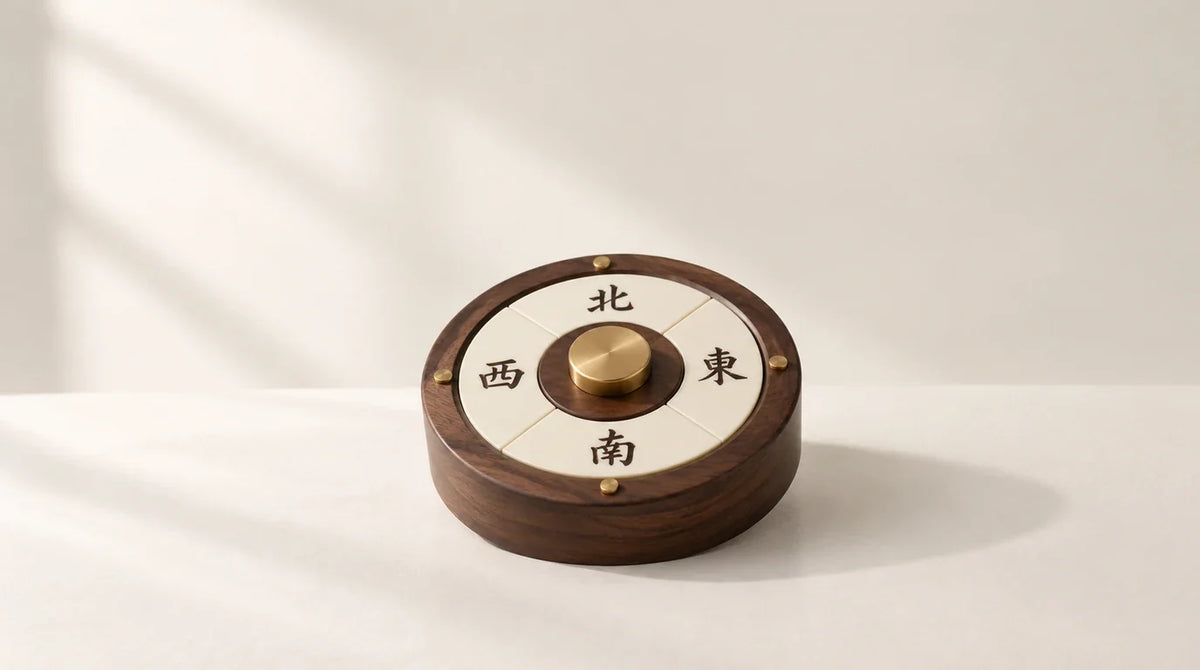
In short. A wind indicator marks the round wind and the dealer position on the table so no player has to trust memory alone. It sits to the dealer's right, moves counter-clockwise when the deal passes, and stays put if the dealer wins the hand or the hand is a draw. The round wind applies to everyone and changes only after a full rotation of four dealers, while your seat wind changes with every deal and matching both pays double. Many American sets do not include one; it is a separate purchase.
A mahjong wind indicator serves as the essential visual anchor for your table, tracking both the prevailing round and the dealer position throughout a full game so no player has to rely on memory alone. This practical accessory displays the four cardinal directions to ensure every participant knows exactly which wind is currently in play.
Without a physical marker, social matches often stall when players lose track of the dealer rotation or the current round wind. We will help you understand how to set and advance this tool to keep your scoring accurate and your game rhythm fluid.
- A Mahjong Wind Indicator Keeps the Game on Track: The Social Navigator
- 3 Steps to Rotate the Indicator Hand by Hand: A Rhythmic Dance
- How Do Round Winds Differ from Seat Winds? A Sharp Distinction
- Style Variations in American and Chinese Play: A Global Perspective
- Choosing the Best Materials for Your Accessory: A Touch of Style
A Mahjong Wind Indicator Keeps the Game on Track: The Social Navigator
The wind indicator tracks the four cardinal directions (East, South, West, North) to determine scoring bonuses. It physically marks the dealer’s seat, preventing rotation disputes in sets containing 144 to 166 tiles.
The last sentence mentions the cardinal directions, which leads directly to the mechanics of tracking the prevailing wind.

Tracking the Prevailing Wind through the Game
This accessory monitors the four cardinal directions during play. The device sits prominently on the table to show the current round. It ensures everyone stays aligned with the game flow.
The prevailing wind is vital for scoring hands correctly. Matching tiles to the round wind earns a scoring bonus. This adds a layer of strategy to every discard and draw made.
The device acts as a visual memory for all players. It prevents players from asking which round it is constantly. The table stays focused on the tiles instead of the logistics.
Identifying the Dealer Position without Confusion
The wind indicator links directly to the current dealer. The marker always sits to the dealer's right side.
It points to the player starting the hand. It serves as a beacon for the first draw. Everyone knows exactly where the action begins each time.
A physical marker prevents disputes at the table. Verbal tracking often fails during heated social matches.
The indicator provides an objective record. It settles arguments about whose turn is next.
Consistency keeps the rhythm flowing. A clear marker ensures the game never stalls.
Explore our selection of game accessories to find the perfect addition to your next social gathering.
3 Steps to Rotate the Indicator Hand by Hand: A Rhythmic Dance
Moving the marker is a ritual that starts before the first tile is even touched. It anchors the table and ensures the flow of the game remains structured and clear for everyone.
Initial Placement at the Start of Play
Setting the indicator to East marks the first dealer. East always begins the game. The block shows the East character clearly to all players at the table.
The starting player is chosen via a dice roll. The highest total usually takes the East seat. This player then places the indicator on their right side immediately.
The physical indicator stays near the East seat. It must remain visible to all three opponents throughout the hand. This prevents confusion regarding the current wind round.
Proper placement avoids accidental knocks during tile movements. Keep it just outside the rack area for safety. This ensures the marker remains stable and readable.

Advancing the Wind when the Deal Passes
Rotation follows a counter-clockwise path when the dealer loses a hand. The deal moves to the right in most traditional rules. The physical indicator follows this movement around the square table. It signals a fresh start for the next player.
Move the indicator to the next player in order. Pick it up gently and place it by the new dealer. This transition happens after every lost hand to maintain the game rhythm.
Progression moves from East through North rounds. The indicator tracks this sequence to ensure scoring accuracy.
- Order of wind rotation: East to South, South to West, West to North, North back to East to change the round wind
Retaining the Position when the Dealer Wins
If the dealer wins or the hand is a draw, the dealer stays put. The deal does not rotate to the right.
The indicator remains stationary in these cases. The streak continues for that player. Moving the marker prematurely would ruin the scoring logic for the next hand and confuse the table.
The wind round only advances after the deal successfully passes. A full circle of dealers must be completed first. This maintains the traditional balance of the four winds.
Check the indicator before shuffling tiles. It confirms if the dealer is on a second or third win. This affects the final payout significantly in many variations of the game.
Explore our selection of distinct wind indicators and accessories to complete your next game night setup.
How Do Round Winds Differ from Seat Winds? A Sharp Distinction
Understanding the difference between the table's wind and your own seat is vital for scoring big.
The Importance of the Current Round Wind
The round wind serves as the prevailing wind for the whole table. It impacts every player equally during the match. The indicator shows this wind throughout four full dealer rotations.
Matching tiles earn extra points during that specific round. A triplet of the prevailing wind is always worth more. It can easily turn a mediocre hand into a winner. Expert players track these tiles with focus.
The round wind only changes after a full rotation. Once North finishes their deal, the indicator flips to the next wind. The cycle then begins again with East.

Determining Your Own Seat Wind Position
A player's seat wind is fixed relative to the dealer. The current dealer is always East for that specific hand.
Scoring bonuses apply for tiles matching your own seat wind. This is your personal power wind. Collecting three tiles provides a guaranteed point boost.
Seat winds are temporary compared to the round wind. Your personal wind changes every time the deal passes to the next player.
Double wind bonuses occur when your seat matches the round wind. This is the most lucrative situation. The indicator helps you spot this rare opportunity instantly during play.
Discover our unique selection of accessories to find the perfect wind indicator for your next social gathering.
Style Variations in American and Chinese Play: A Global Perspective
While the core logic remains, the physical sets and specific rules diverge across the ocean.
American Mahjong Set Standards and Tile Counts
American sets feature at least 152 tiles, and the larger 160- or 166-tile versions add extra jokers and blanks. These sets are larger than Chinese versions. Extra tiles allow for complex National Mah Jongg League patterns.
The wind indicator is often a separate purchase. Modern American sets focus on racks and tiles first. A dedicated indicator adds a professional touch to the table.
The shop does not sell the National Mah Jongg League card. Players must buy that directly from the league.
The right accessories make the American style easier to manage. It keeps the fast-paced gameplay organized and fair.
Traditional Chinese Rotation and Dealer Passing
Classic Chinese variants feature quick dealer rotations. The role passes instantly if no one wins. These games move at a blistering speed compared to Western versions. The indicator must be updated rapidly to keep pace.
Chinese play emphasizes hand volume over strategic pauses. The physical marker is vital for maintaining flow without stopping. This ensures the game remains fluid and rhythmic.
The indicator style reflects cultural aesthetic preferences.
| Feature | Chinese Style | American Style |
|---|---|---|
| Tile Count | 144 tiles | 160 or 166 tiles |
| Indicator Usage | Round and dealer tracking | Separate accessory |
| Dealer Rotation | Rotates if dealer loses | Structured deal flow |
| Scoring Focus | High hand volume | Pattern matching |
Explore our curated selection of accessories to find the perfect wind indicator for your next social gathering.
Choosing the Best Materials for Your Accessory: A Touch of Style
Beyond function, the look and feel of your indicator say a lot about your gaming style.
Common Styles from Wood to Coin Shapes
Wooden blocks offer a classic, heavy feel on the table. Plastic cylinders provide a lightweight alternative. These often feature brighter, easier-to-read engravings for beginners.
Some indicators use ornate carved dragon symbols to signify the dealer. Others prefer a minimalist look. These simple designs feature just the four wind characters.
Resin and heavy plastics withstand years of sliding across tables. These materials ensure durability for frequent social play.
Choose a style that matches your existing tile set. A cohesive look enhances the overall atmosphere of your Mahjong night.
Managing the Game when a Set Lacks an Indicator
You can use a spare East tile to mark the dealer. Simply flip it face up near the current player. This works in a pinch. However, it lacks the professional feel of a real tool.
A dedicated indicator is harder to lose than a single tile. The rotating dial or multi-sided block makes wind changes much clearer. It significantly improves the player experience.
You can easily integrate the indicator into a standard storage case to keep your set organized.
- Use a small velvet pouch for protection
- Store it in the center compartment of the case
- Check for magnetic closures to keep pieces together
Explore our curated selection of accessories to find the perfect match for your next game night.
A mahjong wind indicator ensures seamless play by tracking the prevailing wind and dealer rotations across every hand. This essential tool clarifies scoring bonuses and seat winds, preventing disputes during social matches. Explore our collection of premium accessories to find the perfect marker for your next game night.
Common questions
What is the purpose of a Mahjong wind indicator during a game?
A wind indicator, often called a jongg or wind disc, serves as a vital game accessory to track the prevailing wind and the dealer position throughout a full match. It eliminates the need for players to manually remember which wind round is in play, ensuring the social flow of the game remains uninterrupted. By displaying the cardinal directions of East, South, West, and North, it provides a clear visual record for everyone at the table.
How do you properly set and rotate the indicator as the game progresses?
The indicator is set at the beginning of the game after a dice roll determines the starting player, who begins as East and the dealer. The device is placed to the dealer's right and rotates counter-clockwise each time the deal passes to a new player. If the dealer wins the hand or the game ends in a draw, they keep the deal and the indicator remains stationary. When the dealer loses, the deal moves to the next player in order, and the indicator is updated to reflect the new dealer and the progression of the wind round.
What is the difference between the round wind and a player's seat wind?
The round wind, or prevailing wind, applies to the entire table and changes only after a full rotation of four dealers. It affects scoring for all players, as matching tiles gain extra value during that specific round. In contrast, the seat wind is personal and determined by a player's position relative to the dealer. While your seat wind changes every time the deal passes, the round wind stays the same for a longer period, and matching both can result in significant double wind bonuses.
Do American Mahjong sets typically include a wind indicator?
Many Mahjong sets do not include a wind indicator as a standard component, so it is frequently purchased as a separate accessory to complete a collection. While American sets are sold with 152, 160, or 166 tiles depending on the number of jokers and blanks, the indicator is not counted as part of these tile totals. Adding a dedicated indicator provides a professional touch and helps manage the fast paced nature of American play without confusion.
Where can I purchase the National Mah Jongg League card for my set?
It is important to note that the shop does not sell the National Mah Jongg League card. Players must purchase this specific card directly from the National Mah Jongg League to ensure they have the official rules and patterns for the current year. Having the correct card alongside a quality wind indicator ensures your game night follows the proper standards and scoring regulations.
How should I track the game if my set lacks a physical indicator?
If a set lacks a professional indicator, players can use spare tiles or coins to mark the dealer's position in a pinch. An unused East tile can be placed face up near the current dealer to serve as a temporary marker. However, a dedicated rotating dial or multi-sided block is much easier to see and less likely to be misplaced during play. Storing your indicator in a small velvet pouch within the center compartment of your case will keep it protected and ready for your next session.
Keep reading: Red, green and white dragons explained · American mahjong, start to finish