The American Mahjong Guide for New Players
The essential to remember: Winning requires matching your fourteen tiles to a specific pattern on the annual National Mah Jongg League card. This mandatory reference dictates every legal hand and changes every April to ensure fresh strategic challenges. Precision is vital because one incorrect tile or exposure disqualifies your hand. Use the eight available jokers as wild cards to complete sets efficiently.
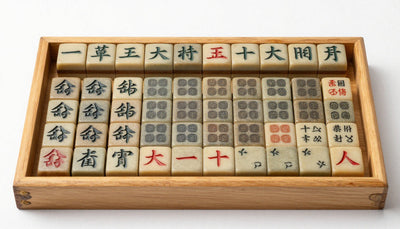
If you want to master the american mahjong guide for new players, understanding the 152 tiles of a standard American set is crucial to support the specific rules of the National Mah Jongg League. We provide this Beginner's Guide to American Mahjong to help you master these components and the annual card system. You will learn the mandatory Charleston passing sequence and the tactical use of eight jokers to complete your winning hand.
- Primary Equipment for American Mahjong Players
- The Annual NMJL Card
- The Charleston Passing Sequence
- Active Play and Tile Calling Rules
- Avoiding Dead Hands and Table Etiquette
A numbered set makes the first games easier; see our american mahjong collection.
Master the American Mahjong Guide for New Players: Essential Equipment
American Mahjong appears complex at first glance. Understanding the game starts with the physical gear on your table. You must master the specific tools and tile sets.
Tile Suits and Special Symbols
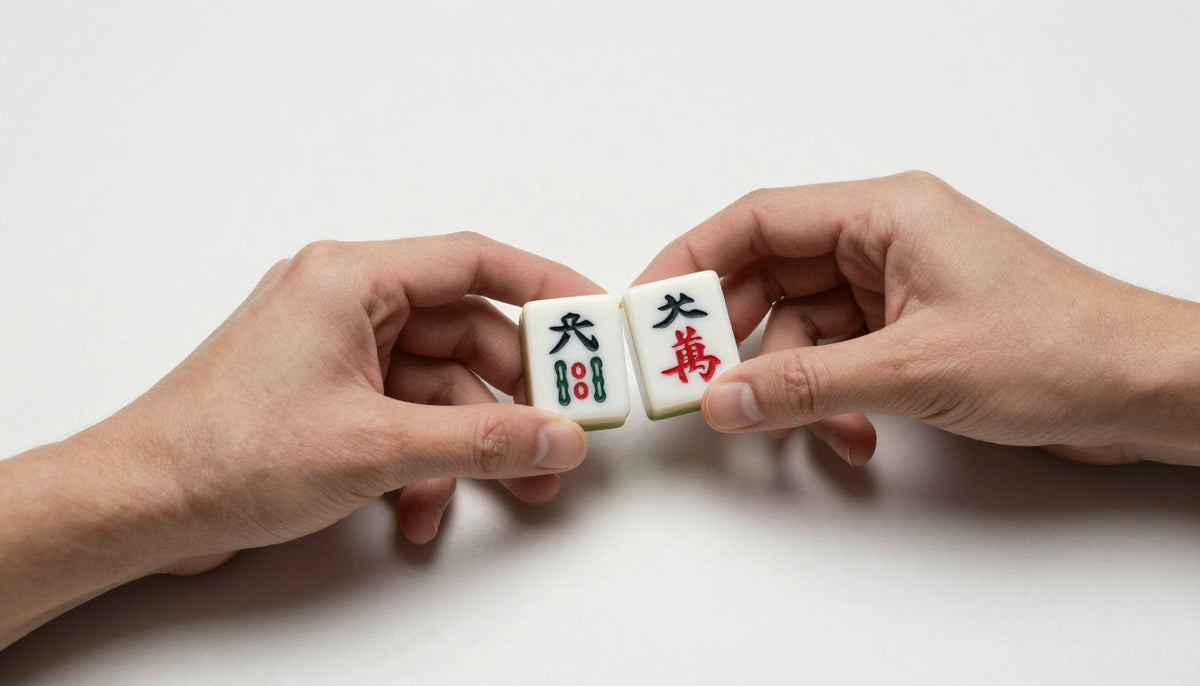
The set includes three main suits: Dots, Bams, and Cracks. Each suit features numbers ranging from one to nine. These tiles form the backbone of almost every hand you build.
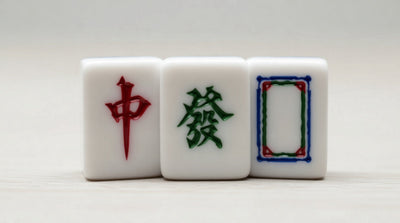
Winds include North, East, South, and West directions. Dragons consist of Red, Green, and White (Soap) symbols. These tiles lack numbers but carry heavy weight in specific hand categories.
Flower tiles add eight unique pieces to the set. Historical records show that Babcock's original rules helped standardize these symbols for the American market.
- Dots: circle designs
- Bams: bamboo sticks
- Cracks: Chinese characters
- Winds/Dragons: specialized non-numeric tiles
Racks, Pushers, and Dice Functions
The physical setup requires four racks. Each player uses one to hide tiles from opponents. This organization is necessary for quick and efficient decision-making during the game.
Most modern mahjong sets include a pusher or "helping arm." This attachment moves the tile wall forward easily. It prevents you from fumbling or breaking the line by accident.
Dice determine the starting point of the game. You roll them to identify where the wall breaking occurs. This ritual officially kicks off every single round of play.
Using racks and pushers ensures a professional and organized Beginner's Guide to American Mahjong experience for all participants at the table.
This guide pairs with our complete walkthrough of how to play American mahjong, which covers the full flow of a game.
If the symbols still look cryptic, start with the mahjong tile guide.
The Annual NMJL Card
Once your tiles are ready, you need the one thing American Mahjong cannot be played without: the official card published each year by the National Mah Jongg League.
What the Card Does
The card lists every hand you are allowed to win with that year. Your goal is to match your fourteen tiles to one line on it, nothing else counts. Every player at the table needs their own copy.
A new card comes out each April, and the previous year's hands retire when it arrives. That yearly reset is why experienced players and beginners often start a season on closer footing than you would expect.
The National Mah Jongg League sells the card directly. The American Mah-Jongg Association publishes an annual card of its own, used by some groups.
Order the current card from the National Mah Jongg League →
Vocabulary You Will Need
A few standard mahjong terms do most of the work at the table. A Pung is three identical tiles. A Kong is four. A Quint is five, which only certain hands permit.
Accuracy matters more than speed. A hand that does not match its line exactly does not win, and exposures that make every remaining line impossible end your round.
The Charleston Passing Sequence
Before you even draw your first tile of the actual game, you have to go through the Charleston, the most chaotic part of the setup. This phase is unique to the American version and involves exchanging groups of three tiles to refine your hand.
Mandatory and Optional Passing Rounds
The first Charleston is mandatory. You pass three tiles to the right, then across, then left. This is a non-negotiable phase for all four players.
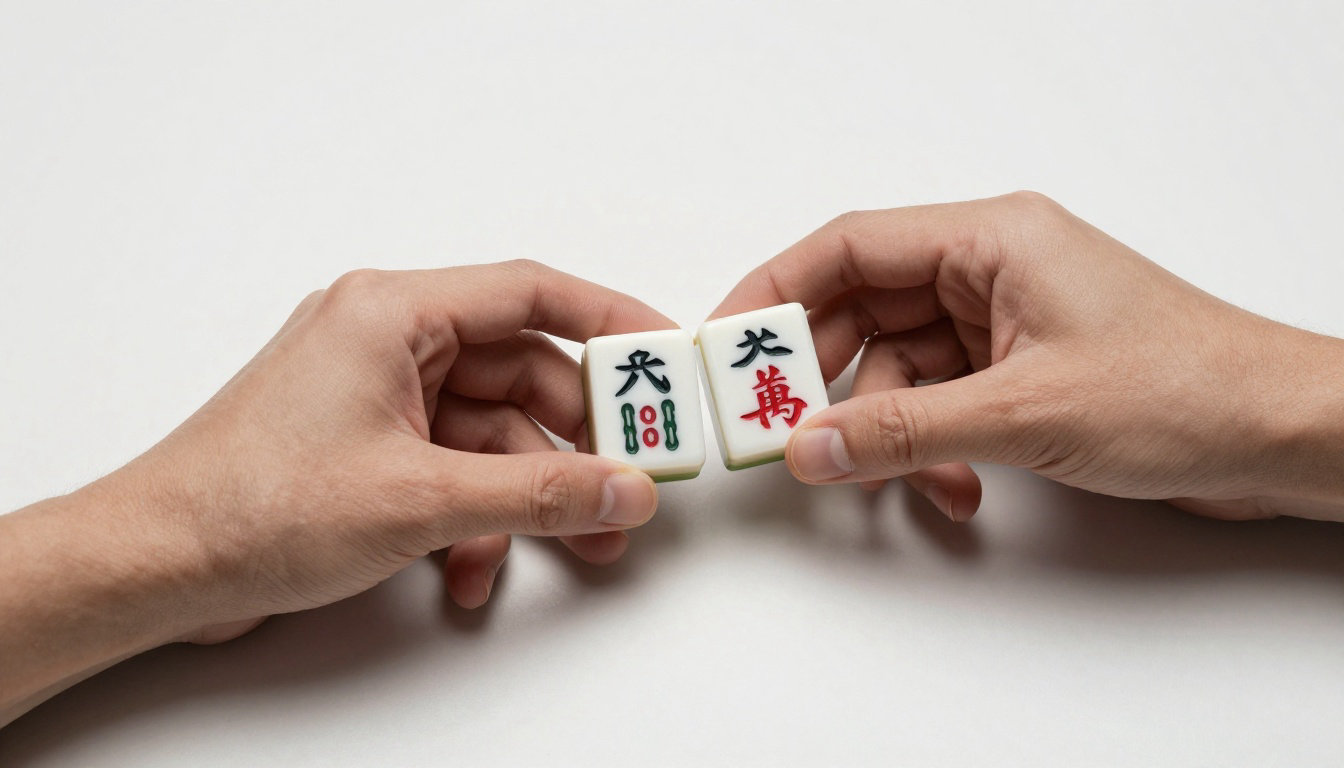
The second Charleston only happens if everyone agrees. If one player says "stop," the passing ends immediately. It is a strategic choice based on your hand.
The Charleston's specific order is a unique American tradition. It differentiates this version from international styles that skip this complex passing dance. Follow this sequence as part of your Beginner's Guide to American Mahjong.
- First Right
- First Across
- First Left
- Second Left
- Second Across
- Second Right
Selection Logic for Discarding Tiles
How do you choose what to give away? Look for tiles that don't fit your primary or secondary hand goals. Never pass a Joker, as that is strictly forbidden. Focus on tiles that do not create consecutive sequences.
On the final pass of each Charleston, you can take tiles from the person passing to you without looking at them first. You may pass one, two, or three tiles this way.
This move helps you avoid giving your opponent a tile they might actually need. It is a defensive strategy. It provides flexibility when you lack enough unwanted tiles to complete a full exchange of three.
These techniques prevent you from breaking up potential pairs or combinations prematurely during the exchange.
Active Play and Tile Calling Rules
The transition from the Charleston to active play shifts the focus to the wall. We now move into the core phase where drawing and discarding determine the pace of the game.
Drawing and Discarding Turn Flow
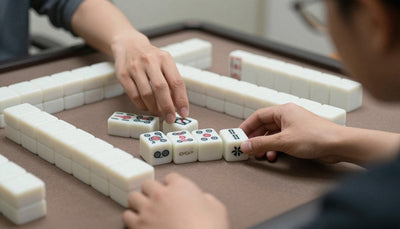
Play moves counter-clockwise. You draw a tile, decide if you want it, and then discard one onto the table. Speed and rhythm are very important.
You must name the discarded tile clearly. Once it touches the table and you say the name, that tile is "live" for others to call and claim.
If no one calls it, the turn passes to the person on your right. This cycle continues until the wall is empty or someone wins.
Always pay attention. Missing a discard because you were looking away can ruin your entire strategy for that round.
Rules for Pungs, Kongs, and Quints
Calling a tile allows you to complete a set out of turn. A Pung is three identical tiles. A Kong is four, and a Quint is a rare set of five.
When you call a tile, you must ""expose" the set on top of your rack. This tells the table part of what hand you are building.
Exposing a set is a double-edged sword; it brings you closer to Mahjong but reveals your intentions to every opponent.
Note that you can only call the most recent discard. You cannot reach back for a tile discarded two turns ago.
Joker Usage and Swapping Mechanics
Jokers are the ultimate wild cards. They can replace any tile in a Pung, Kong, or Quint. However, they are useless for singles or pairs.
The Joker swap is a vital mechanic. If an opponent has an exposed Joker and you have the actual tile it represents, you can trade yours for theirs.
This move is a huge advantage. It gives you a wild card while effectively taking a resource away from your opponent's visible hand.
Remember that jokers define the American style. Mastering the Joker swap is a core part of any Beginner's Guide to American Mahjong.
Avoiding Dead Hands and Table Etiquette
Even with a great hand, one small technicality can get you disqualified, so you need to know the pitfalls and the social rules.
Common Technical Errors and Penalties
A dead hand occurs when your exposures make it impossible to match any line on the card. Another player can officially call you dead, stopping your play immediately. You cannot declare yourself dead.
Having too many or too few tiles also kills your hand. This usually happens during a messy Charleston or a forgotten draw phase. You must have exactly 13 tiles, or 14 when declaring Mahjong.
If you are declared disqualified, you stop playing. You no longer draw or discard tiles. You still pay the winner at the end of the round if someone else completes their hand.
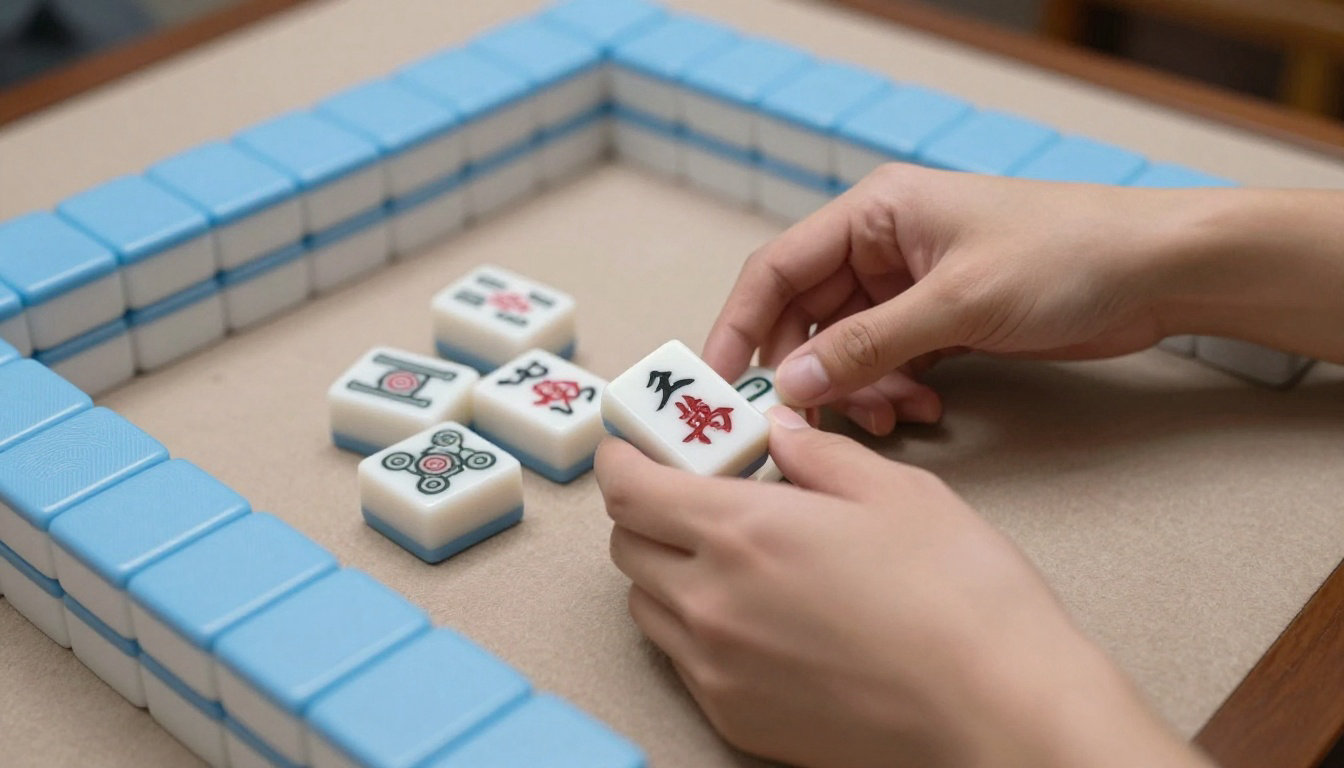
Exposing tiles for a hidden hand or using jokers for single tiles results in a dead hand. These errors are common for beginners. Always verify your hand against the NMJL card before making an exposure.
Standard Conduct for Home Games
Good etiquette keeps the game friendly. Don't criticize others for their discards. Keep the table talk to a minimum during the intense Charleston phases. Avoid giving "tells" through sighs or comments about your needs.
Whether you have a luxury mahjong set or a travel mahjong set, take care of your set. Tiles should be cleaned occasionally to prevent oils from your hands from staining the intricate numeric designs or symbols. Help neighbors build their walls to keep the game moving quickly.
When choosing a complete mahjong set, consider sets that include quality mahjong accessories like racks and pushers. Respect "house rules." Some groups have slight variations on betting or passing. Always ask about these before you sit down for the first time. Aim for a steady pace to finish games within 30 minutes.
- Clean tiles regularly
- Clarify house rules
- Maintain a steady play pace
- Avoid "table talk" during turns
Mastering the NMJL card, the Charleston sequence, and joker mechanics is your path to victory. Use these tools to build winning hands and avoid disqualification. We provide the foundation for your future success; start your first game now to refine your skills in American Mahjong. Practice makes every tile count.
When does the 2027 American mahjong card come out? →
Independent, not affiliated with the National Mah Jongg League. The annual card is sold by the League; order it here.
Common questions
What tiles are included in an American Mahjong set?
How do I interpret the colors and abbreviations on the NMJL card?
What is the correct order for the Charleston passing sequence?
When am I allowed to use a Joker tile?