How to Prepare Before Hosting a Mahjong Night
In short. A smooth mahjong night is decided before the doorbell rings. Confirm the variant and the card first, because tile count, jokers and scoring references depend on that choice, then count the pieces that commonly go missing, especially jokers, blanks and dice. Set out four matching racks and pushers, test each one for wobble, and lay a mat that actually fits the table with equal working room at every seat. Decide where tiles, racks and the mat go during cleanup before the first wall is built.
A smooth mahjong night is prepared before the doorbell rings. Confirm the game variant, check that the equipment is complete and give every player enough room to see her hand and reach the wall. The table should support conversation without asking guests to solve missing racks, unstable chairs or a confusing mix of rules. These seven checks keep the host focused on the group instead of the equipment.
Along the way, this guide covers the questions that come up before hosting and the habits that keep a game night running smoothly.
- Confirm the variant, rules and card
- Count and inspect the tiles
- Set out four matching racks and pushers
- Use a mat that fits the table
- Arrange seating, light and personal space
- Keep small accessories in one place
- Plan cleanup and storage before play
1. Confirm the variant, rules and card
Tell guests in advance whether the table will play American, Chinese or another form of mahjong. The tile count, use of jokers, racks and scoring references depend on that choice. For American mahjong, ask every player to bring the current National Mah Jongg League card, or confirm that she has ordered one before the date.
Do not plan to teach several rule systems in the same first hour. If one guest is new, send a short rules guide and the start time early enough for questions. Place any house notes beside the table, but keep them separate from the official card. The Mahjong Section does not sell the card, so direct players to the National Mah Jongg League for the current edition.
From the table: Clarity up front helps. When you are forming a table or filling a fourth seat, state plainly how the game runs: which rules you follow, where you meet and how often. It saves everyone a round of questions later.
2. Count and inspect the tiles
Open the set before game night and count any pieces that commonly go missing, especially jokers, blanks and dice. Check the faces for marks that make a tile identifiable from the back, then wipe dust with the care method recommended for the material. A complete set on the table prevents the awkward discovery that the host owns the wrong variant.
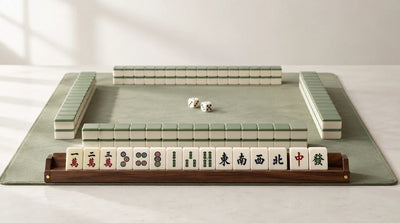
If guests are learning American mahjong, use tiles with corner numbers and lettered winds. Place replacement pieces only when their backs, dimensions and thickness match closely. Keep the full set together after inspection rather than dividing it among several unmarked containers. A host using a new set should build one wall in advance to confirm the tiles fit the racks and mat.

American Mahjong Set with Racks - Zinnia
From $174.99
A complete American setup with 166 tiles, four racks, chips, dice, a wind indicator and a zip bag.
From the table: Sets can come with stories. An old set inherited from a family member may turn out to be standard Chinese tiles with a few extras that no one recognizes, so have someone who reads Chinese on hand for the first look. Opening an unfamiliar set before guests arrive leaves time for that kind of discovery.
3. Set out four matching racks and pushers
Give every seat a rack before guests arrive. Test the base for wobble and move each pusher through its normal range so a loose hinge does not become the first repair of the evening. Matching racks make rotation easier because no seat has a shorter channel or a different way to move the wall.
Place the racks far enough from the table edge that a hand or sleeve will not knock them onto the floor. The pusher should face the direction the group expects and should not scrape the mat. If the set uses oversized tiles, fill one rack completely and look from the opposite seat. The hand should be readable without forcing tiles to overlap.

Mahjong Racks with Pushers - Larch
From $96.99
Four 18.5-inch racks with built-in pusher arms in a single chosen color.
4. Use a mat that fits the table
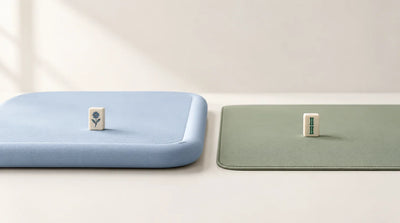
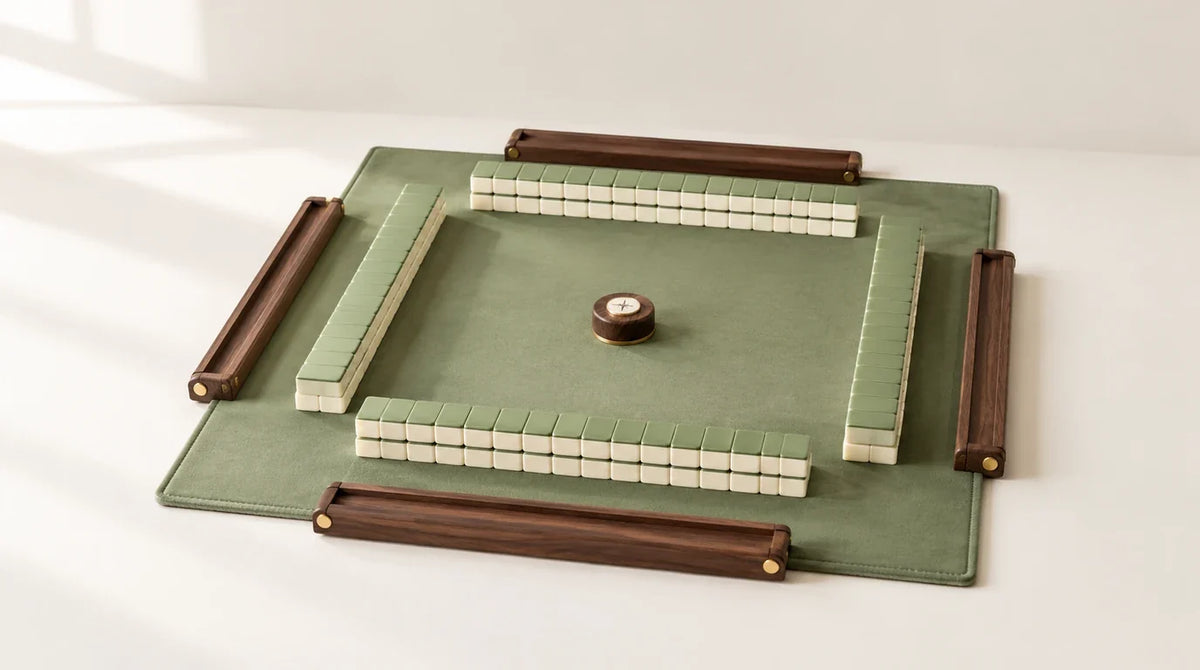
Lay the mat flat well before the game so rolled edges have time to settle. A mat softens tile noise, protects the surface and gives the wall a clear area. It also helps the host see whether four racks, four drinks and the shared accessories can fit without crowding.
Center the mat and leave equal working room at every seat. Check that the backing grips the table and that any printed directions are oriented consistently. If the artwork is detailed, keep the wall in the calmer center. Avoid placing a tablecloth under a rubber-backed mat unless you have tested the combination, because the two layers can slide together.

Green Mahjong Mat - Selva
$89
A green mat with an open center, anti-slip backing and directional play labels.
From the table: Guests notice the mat. A mat is one of the few pieces a visitor will compliment out loud, so it is worth choosing one that gives the table a finished look. A custom mat printed with a personal photo makes the table unmistakably yours, even when it does nothing for your game.
5. Arrange seating, light and personal space
Four chairs should be similar in height and close enough for each player to reach the center without leaning across another person's hand. Turn on the actual evening lighting and sit at every seat. Tile numbers, wind letters and the annual card should remain readable without shadows from a pendant lamp or glare from a window.
Give each player a place for a drink that is outside the mixing area. Add a small side surface if the dining table is narrow, and keep handbags away from chair legs. If a guest has limited reach or vision, reserve the seat with the clearest light and easiest access. Comfort is part of the setup because a full session lasts far longer than the first hand.
6. Keep small accessories in one place
Dice, chips, a wind indicator, pencils and card sleeves should have one visible home. A zipped pouch prevents the smallest items from disappearing beneath tiles in a large tote and lets the host bring everything to the table in one movement. Open it before guests arrive and place only the pieces needed for that game beside the mat.
Do not cover the play area with every accessory the host owns. Extra dice and spares can stay in the pouch until needed. If the group uses a wind indicator, put it where all four players can read it without moving their racks. Keep food tools, napkins and serving pieces on a separate surface so game equipment remains easy to find.

Mahjong Dice Bag - Raffia
$87.99
A flat zipped nylon pouch for dice, chips, coins and other small table pieces.
From the table: Food is part of the evening, and it deserves a spot of its own. Themed snacks set out on a separate food table keep crumbs and drinks away from the tiles. A cocktail and trail-mix bar is an easy first-night setup that works well with neighbors and friends.
7. Plan cleanup and storage before play
Decide where each part will go before the first wall is built. When the evening ends, guests are talking and the host is clearing glasses, so an improvised packing system invites missing dice and scratched racks. Separate tiles, long racks and small accessories, then place the containers beside the table rather than in another room.
Check the floor and every chair before closing the final bag. Dense tiles should sit at the bottom, while acrylic racks need a sleeve or a separate compartment. Do not put a damp mat into a closed tote. Roll or fold it according to its care instructions and let it dry first. A consistent cleanup routine makes the next game faster and protects the set between sessions.

Mahjong Bag Set - Sedge
$115.99
A matching tote, zipped tile pouch and long rack sleeve for a complete table setup.
| Before guests arrive | What to verify | Why it helps |
|---|---|---|
| Rules and card | Variant and current references | Everyone prepares for the same game |
| Tiles | Count, markings and condition | No missing pieces at the table |
| Racks and pushers | Four matching, stable pieces | Equal setup at every seat |
| Mat | Size, grip and orientation | A quieter, defined play area |
| Seating | Reach, light and drink space | Comfort through the full session |
| Accessories | One pouch and a visible indicator | Small pieces stay together |
| Storage | A place for tiles, racks and mat | Cleanup is faster and safer |
Keep reading: Small upgrades for a premium game night · Mahjong gift ideas for players and hosts
How to Prepare Before Hosting a Mahjong Night
The hardest part of restarting a regular Mahjong group is often choosing a date. Use this planner to turn “we should play soon” into an invitation people can answer.
1. Pick a date
Offer two specific dates and one clear time window. Confirm when guests should arrive and when the first game will begin. If your group rotates homes, agree on the first host before sending the invitation.
2. Confirm the game and players
Name the version: American Mahjong, Chinese Mahjong, Riichi or another style. For a typical four-person American Mahjong table, confirm four players. If a fifth person wants to join, consider how your group will rotate or organize future games rather than promising simultaneous play.
If you're still looking for players, check official library calendars, community centers, lifelong-learning programs and verified open-play listings. Confirm skill level, registration and equipment directly with the organizer. Never post a private home address publicly.
3. Prepare the setup
Check the exact tile inventory against the product and the variant you play. Measure the table, arrange comfortable chairs and test lighting from all seats. Verify rack/pusher fit if used, and follow the current rules and card requirements for your group. Do not assume a future annual card is already available.
4. Make beginners welcome
Tell invitees whether beginners can attend. Start by identifying tiles and useful terms, then explain the flow of play. Correct kindly and distinguish house customs from official rules.
5. Plan refreshments without crowding the table
Choose a simple snack break and keep food and drinks away from tiles, cards and racks. Ask about dietary needs in advance.
Invitation template
Mahjong night is back! Would you be free on [date A] or [date B]? We'll play [variant] at [time], with a little time to settle in first. [Beginners welcome / experience level]. I'll provide [equipment and refreshments]. Please bring [items, if any]. I'll send the address privately once we confirm.
Final checklist
- [ ] Date and host confirmed
- [ ] Players and variant confirmed
- [ ] Skill level and rules expectations shared
- [ ] Tile inventory and equipment checked
- [ ] Current card or other required reference available
- [ ] Table, chairs and lighting ready
- [ ] Food and drinks kept away from the game
- [ ] Next game date suggested before guests leave
A good Mahjong tradition starts with a date people can keep.
How to plan a Mahjong game night
Offer two dates, confirm players, name the variant, explain what the host provides and set a clear start time. The goal is a repeatable plan rather than a one-off party.
How do you find a fourth player?
Check local libraries, public open-play listings and community centers. Confirm level and registration; share private addresses only with confirmed guests.
Common questions
What should I prepare before hosting American mahjong?
How much table space does each mahjong player need?
Should every American mahjong player bring a card?
How should I store mahjong equipment after game night?