Mahjong Table Upgrades That Improve Game Night
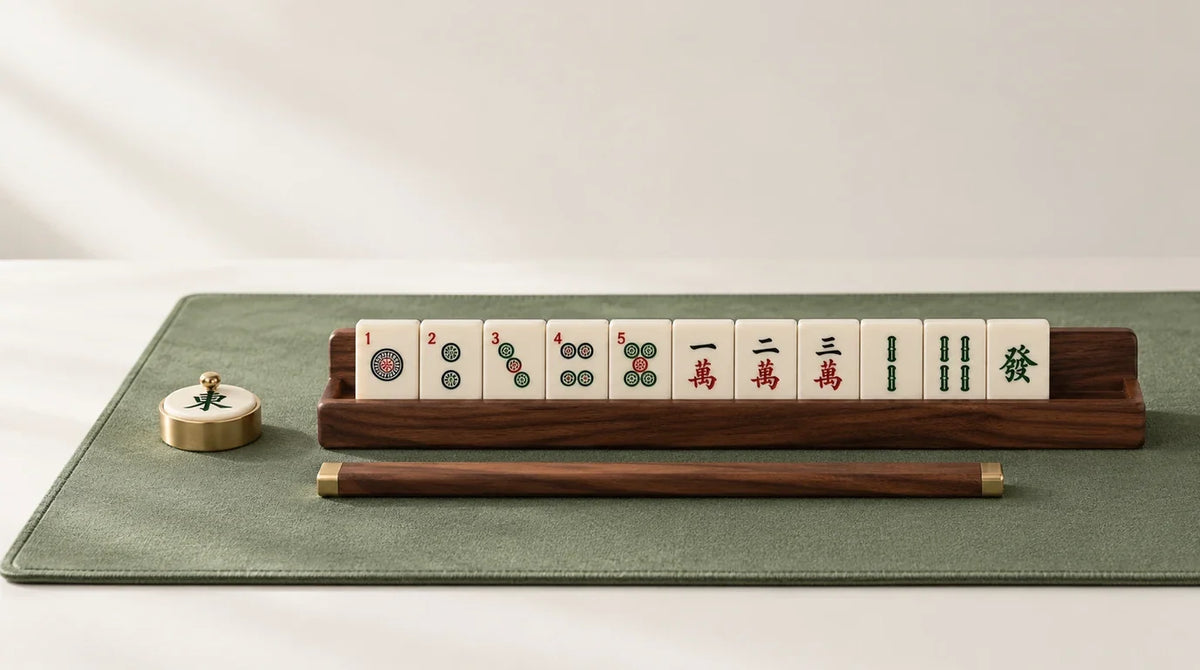
In short. A premium game night comes from fit and consistency, not from more objects. Start with a mat that fits the table exactly that leaves room for four racks and cards, then make every seat equal with coordinated racks and pushers, one clearly visible wind indicator and a single die instead of a pile of markers. Keep cards flat in a holder and give the whole setup one structured tote, and balance the light across all four seats. None of these upgrades is loud; each removes a small pause.
A premium mahjong night comes from consistency, comfort and a table that is ready before guests arrive. The most effective upgrades solve small problems such as sliding walls, mismatched racks, hard-to-see markers and loose storage. They do not need to be loud or numerous. These eight improvements keep the setup restrained while making every stage feel considered.
Along the way, we look at the small changes that make a table feel more premium and the details that show up once those pieces are in play.
- Add a mat that fits the table exactly
- Use four coordinated racks and pushers
- Choose one visible wind indicator
- Provide a distinctive die without crowding the center
- Keep cards in a dedicated flat holder
- Organize the full setup in matching storage
- Balance the lighting at all four seats
- Create a calm service and cleanup routine
1. Add a mat that fits the table exactly
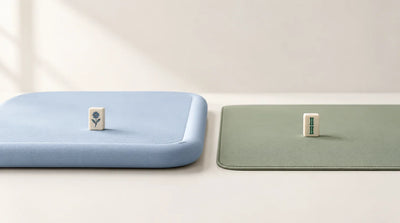
A correctly sized mat softens sound, improves grip and defines the active playing area. Measure the tabletop and leave space for four racks and cards. A mat that hangs over an edge or crowds the corners feels less polished than a bare table.
Choose a pattern that keeps tile faces readable from every seat. Unroll it early, smooth the corners and remove lint before guests arrive. The premium effect comes from preparation and fit, not from a busy print.

White Lotus Mahjong Mat - Lotus
$89
A light velvet-touch mat with stitched edges and a stable backing.
From the table: A faux leather mat that is thick and heavily textured lets tiles wash smoothly across the surface. Upgrading from a folding table and chairs, a 38 to 40 inch square table or a larger round one both work well. The table and the mat work as a pair.
2. Use four coordinated racks and pushers
Four consistent racks give every seat the same space and wall-moving motion. Match channel width and lip height to the tiles, then operate each pusher before the game. A coordinated set should feel reliable before it looks decorative.
Place the racks evenly around the mat and remove protective film or packing residue. If one piece wobbles or catches, correct it before guests sit down. Uniform function is what makes the table feel intentional.

Acrylic Mahjong Racks - Larkspur
From $114.99
Four matching 18.5-inch acrylic racks with attached pushers.
From the table: For some players, racks are where the color goes. Hot pink or lavender racks can add contrast against new tiles, a mat and dice. Pushers made to swap onto existing racks let you change the look of the table without buying a new set.
3. Choose one visible wind indicator
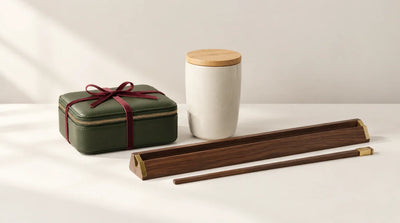
One clear shared marker reduces clutter and gives the table a fixed reference. Select markings that remain readable from all four chairs and a holder that stays stable on the mat. Wood can warm a traditional setup, while clear or gold acrylic suits modern racks.
Explain the group's use once and keep the indicator in a consistent central position. Do not add several objects that communicate the same information. Restraint makes the chosen piece more useful and more visible.

Mahjong Wind Indicator - Cypress
From $45.99
A marked wind cube with a gold acrylic or wooden holder.
4. Provide a distinctive die without crowding the center
A clearly marked die is easy to handle and can add one controlled accent color. Confirm that it supports the group's established routine rather than introducing an unfamiliar procedure for appearance alone. It should contrast with the mat and remain visible after a roll.
Keep other dice or unused markers in the accessory pouch. A premium center has breathing room around the wall and discards. One functional statement piece is stronger than a collection that players must move every turn.

Mahjong Dice - Juniper
From $18.99
A large acrylic die marked with winds and dragon faces.
5. Keep cards in a dedicated flat holder
Annual cards look better and last longer when they arrive flat, clean and separate from dense tiles. Give each player room beside her rack, and use a slim holder for transport. The current official card is obtained separately from the NMJL.
Do not force cards into an overfilled pouch or leave them beneath drinks. A simple owner mark helps identical copies return to the right person. Paper care is a small detail that guests notice through the whole season.

Mahjong Card Bag - Linen
From $18.99
A compact mahjong card bag for keeping flat paper items separate from tiles.
From the table: Paper care can be a small project. A rule book that gets a lot of use holds up better with the pages taken apart and slipped into sheet protectors inside a three-ring binder. It protects the pages, flips easily and leaves room for tabs and notes.
6. Organize the full setup in matching storage
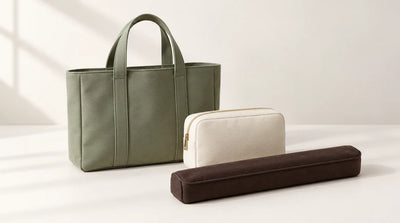
A structured tote makes arrival and cleanup quieter because tiles, racks and small pieces already have assigned places. Separate heavy objects from long acrylic edges and paper cards. The bag should close easily without forcing every accessory into one compartment.
Attach a short packing list inside and use it before leaving each location. The premium experience continues after the final hand when no one searches under chairs for a missing pusher or carries loose racks to the car.

Mahjong Bag Set - Sedge
$115.99
A coordinated tote with separate tile and rack storage pieces.
7. Balance the lighting at all four seats
Even lighting makes suit markings and the annual card easy to read without glare. Test the room after sunset, since one bright pendant can reflect from acrylic tiles while leaving a far seat in shadow. Add soft surrounding light or adjust seating before decorating the table.
Keep cords away from walking paths and use shades that do not hang into a standing player's reach. Ask guests whether they can read comfortably. Premium hospitality responds to the people at the table rather than assuming brighter is always better.
From the table: Readability depends on the tiles as well as the light. A set with larger tiles makes exposures easier to see across the table, and large, crisp numbers on a white background read at a glance. Asking each guest what they can see from their seat can point to a change like this.
8. Create a calm service and cleanup routine
Place drinks and food on a side surface, offer water before play and keep napkins within reach but outside the wall. This protects cards and gives each player uncluttered space. Plan a natural break instead of circulating dishes over exposed tiles.
At the end, count tiles by category, secure small accessories, sleeve racks and roll the clean mat. The same quiet routine each week makes hosting look effortless. It also protects the investment behind the polished table.
Choose upgrades in the order of the problems they solve. If tiles slide, begin with the surface. If hands feel crowded, test rack fit. If setup is slow, improve storage. A practical sequence produces a more cohesive result than buying several decorative objects at once.
Limit the palette to the tiles, mat and one or two accessory colors. Let clear pieces and neutral storage create visual rest. The table should feel prepared rather than staged, with every object easy to reach and easy to return.
Finally, rehearse the complete evening once. Unpack, light the room, build the walls, place drinks and pack everything again. The rehearsal identifies awkward steps before guests arrive and turns small upgrades into a genuinely smoother experience.
Ask regular guests which physical detail interrupts them most. A player may value larger markings, a lower-glare seat or an easier pusher more than a centerpiece. Solving that issue is a premium upgrade because it improves every hand, even if the change is nearly invisible.
Keep a spare clean cloth, current tile inventory and full care instructions close to the organized storage bag. Fast, calm responses to a fingerprint, spill or missing piece protect the mood. Prepared hospitality is more luxurious than a crowded table of objects with no clear use.
| Upgrade | Premium effect | Practical test |
|---|---|---|
| Fitted mat | Quieter defined surface | Size, grip and contrast |
| Coordinated racks | Consistent player positions | Tile fit and pushers |
| Wind indicator | One clear reference | Visibility |
| Distinctive die | Controlled accent | Group routine |
| Card holder | Protected paper | Flat storage |
| Organized tote | Calm arrival and cleanup | Loaded compartments |
| Balanced lighting | Comfort at every seat | Glare and shadows |
| Service routine | Uncluttered play | Side surface and checklist |
Keep reading: How to prepare before hosting · Mahjong gift ideas for players and hosts
Mahjong Table Upgrades That Improve Game Night
A useful upgrade solves a problem you've noticed during real games. Before adding something to your cart, ask: what keeps interrupting play?
If the playing surface is uncomfortable
Measure the table and consider whether a suitable mat would help define the play area or change how tiles handle. Compare actual material, backing, dimensions and care. If the existing surface works, no purchase is needed.
If walls are awkward to move
Check your racks and pushers. Measure tile dimensions, usable rack length, lip/channel design and the pusher mechanism. Matching colors don't establish compatibility.
If you carry your set often
Inventory the complete packed setup and measure its dimensions and weight. A bag must accommodate tiles, racks, mats and small pieces you intend to bring. Check the bag's published capacity before buying.
If setup takes too long
Try sorting and organizing the equipment you already own. Small accessories may help, but the first step is understanding what is being misplaced or delayed.
If players struggle to read the tiles
Improve lighting and seating before assuming a new set is necessary. When comparing tile sets, examine clear photos of numbered suits, winds, dragons, flowers and jokers, along with tile dimensions.
Your decision card
| Problem | Check first | Possible solution |
|---|---|---|
| Crowded playing surface | Table layout and dimensions | Reorganization or suitable mat |
| Racks don't fit | Tile and rack measurements | Verified compatible racks |
| Heavy travel | Packed weight and capacity | Correctly sized bag |
| Missing small pieces | Inventory and storage | Organizer or fitted case |
| Difficult-to-read tiles | Lighting and contrast | Better lighting or clearer tile design |
Before you buy
Confirm the actual product specifications, price, stock, delivery and return conditions. Avoid buying duplicates or bundles whose components you don't need.
Explore Mahjong accessories only after identifying a real need.
The best upgrade may be a better setup rather than another product.
Luxury Mahjong accessories versus practical upgrades
A premium finish may be attractive but does not guarantee fit or usefulness. Compare dimensions, materials, durability claims and actual needs.
What upgrade makes game night easier?
Identify whether the friction is lighting, tile handling, rack fit, storage or transport. No purchase may be necessary.
Common questions
What is the easiest way to make mahjong night feel more premium?
Should mahjong accessories all match?
Where should drinks go during mahjong?
What should be packed after a premium game night?