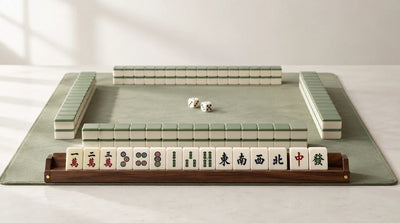
Mahjong Party Ideas: How to Host a Mahjong Night
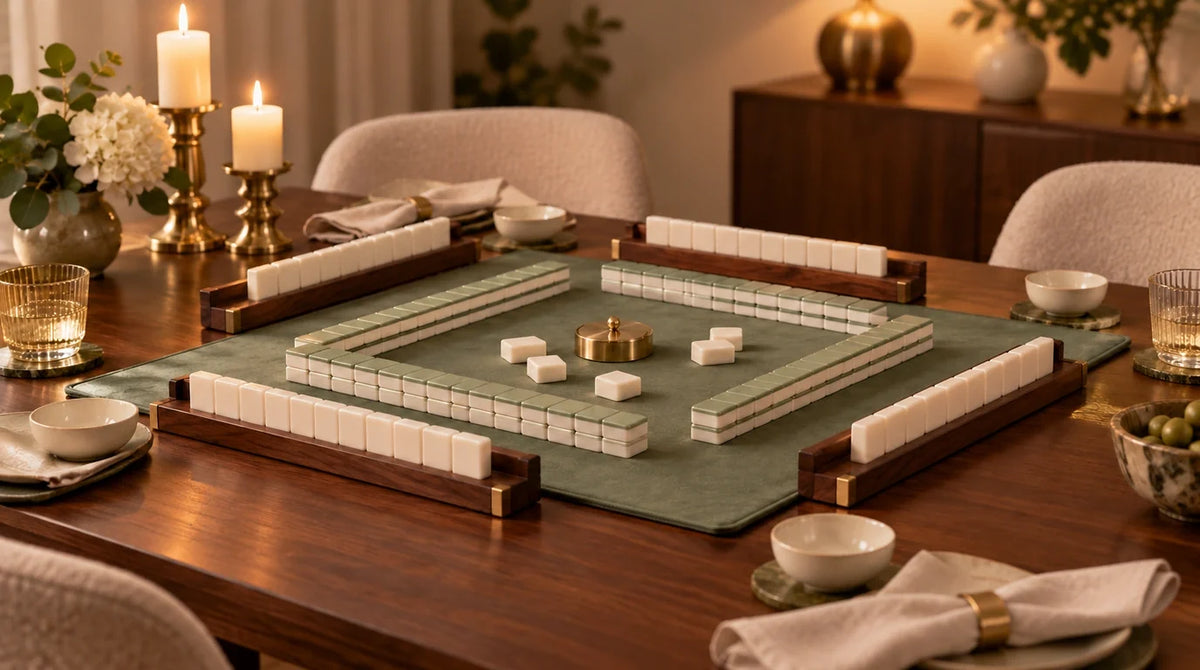
In short. A mahjong party is a game night with a plan: a theme, a table and a full set for every four guests, food that keeps hands clean and prizes winners take home. Start with the head count, since it decides everything else — eight guests means two tables, sixteen means four. Play short rounds with a house twist and rotate players between tables. Choose dry snacks over sauces, and keep drinks and messy dessert on a side surface away from the tiles.
A mahjong party is a game night with a plan: a theme, a table and a full set for every four guests, food that keeps hands clean and something for the winners to take home. Start with the head count, since it decides everything else. If some guests are new to the game, send them our guide to playing American mahjong a few days ahead, and seat each one beside a patient player.
This guide also covers the themes that work for a mahjong night, the rounds that keep a big table laughing and the prizes guests actually take home.
- Pick a theme for the night
- Count tables, sets and seats
- Play short rounds with a twist
- Serve food that keeps tiles clean
- Plan small prizes for the winners
- Move the game to the pool
- Close the season with a gift exchange
1. Pick a theme for the night
A theme answers three questions at once: what guests wear, what you serve and how the tables look. Tie it to the calendar so it feels natural, like Lunar New Year in winter or a football weekend in the fall. Keep it simple enough that guests can join in with what they already own, and let the mat carry the decor, since it sits under every hand all evening.

Lion Dance Mahjong Mat - Lantern
$89
A pink lion dance lion on sky blue with streamers and fireworks, inside a striped rainbow border. Velvet-touch top, stitched edge, anti-slip backing, four square sizes.
More prints for every season are in our mat collection.
From the table: A theme is the easiest way to make a mahjong night feel different. A muumuu party, a back-to-school night or a Christmas in July party all take little more than a name and a few decorations, and a football night works just as well. A pajama party tournament makes a good end to the year, with a set number of rounds, lunch, a snack and a prize for the winner.
2. Count tables, sets and seats
Each table seats four and needs a complete set: tiles, four racks, dice and, for American play, a card at every seat. Eight guests means two tables, sixteen means four. If you own one set, ask regulars to bring theirs, and tie a ribbon or tag to each bag so nothing goes home with the wrong player. With an odd number, let one player per table sit out a hand in turn, or keep a spare seat for whoever arrives late. Light each table well, and give drinks a side surface away from the tiles.
3. Play short rounds with a twist
At a party, a long serious game leaves half the room waiting. Play a fixed number of hands per round, then rotate players between tables so everyone meets everyone. A house twist for each round keeps beginners in the running: a round played against a timer, a round where each hand's winner moves to the next table, or a round where everyone must build a hand from one section of the card. Announce the twist before each round and keep a simple tally on a sheet by the door.
From the table: A party does not have to include the normal game at all. Give each round its own playful rule, and send every guest home with a small prize made for the night. It is often the evenings that break the usual format that guests remember.
4. Serve food that keeps tiles clean
Whatever touches a guest's fingers can end up on the tiles. Choose dry bites over sauces and frosting: nuts, pretzels, crackers, cut fruit on picks. Set the food on its own table, put napkins at every seat, and save the messy dessert for the break between rounds.
From the table: Snacks matter more than they look like they matter at a mahjong table. Choose dry food that leaves your fingers clean, because the one rule for party food is that it should not make the tiles tacky. A house snack mix made for the occasion is an easy way to keep the spread on theme.
5. Plan small prizes for the winners
Prizes give every round a point without raising the stakes. Count one prize per round per table, plus a door prize so a guest who never wins still goes home with something. Small and themed works better than big and generic, and a piece guests can use at their next game beats a trinket that ends up in a drawer.

Mahjong Keychain - Myrtle
$35.99
A jade pendant shaped like the green dragon tile, with a red bead, on a thin or braided cord loop. No metal ring to pry open.
From the table: Small prizes go far at a party and cost little to make for a large crowd. For a mahjong retreat, a trinket bar of small mahjong gifts for wins, plus a daily door prize drawing, keeps a whole weekend lively. Match the prize to the moment and guests remember the gesture long after the last hand.
6. Move the game to the pool
In summer, a pool party turns mahjong into an afternoon outdoors. Set up tables in the shade for those who want to stay dry, and keep good tiles away from wet hands. Waterproof card decks, like those in our mahjong playing cards, survive splashes. To play in the water itself, read our aqua mahjong guide first.
From the table: A warm-weather theme is one of the easiest to pull off. A pool, a shaded table and room for guests to rotate in and out of the game are all it takes to host a larger crowd. When the evening is the point as much as the game, keep the format loose and let players come and go.
7. Close the season with a gift exchange
A gift exchange gives the last game of the year a finale. Set a price cap so nobody feels outspent, ask for something mahjong themed, and draw numbers for the order of picking. A cookie swap on the same day sends everyone home with a plate. For ideas at every price, browse our mahjong gifts.
From the table: A mahjong-themed white elephant exchange pairs well with a cookie swap: guests bring one wrapped gift and one batch of cookies, and everyone leaves with both. It is a simple format that fills a holiday meeting without adding much planning. The theme does the work, so the host only has to set a date.
Keep reading: Moving from online to in-person mahjong · How to find people to play with · Choosing a mat for every kind of game night · Short a player? Siamese rules for two
Mahjong Party Ideas: How to Host a Mahjong Night
A successful Mahjong night is not a showroom. It's a comfortable table, a clear plan and people who feel welcome—whether they have played for years or are joining for the first time.
Start with an invitation that answers the practical questions
Include the date, arrival time and expected game start. Name the Mahjong variant, explain whether beginners are welcome, and tell guests what the host will supply. For American Mahjong, confirm whether each guest should bring the appropriate current card. Mention food and any group customs, but do not confuse house rules with official rules.
Invitation you can adapt:
Come over for Mahjong and Friendsgiving! Arrive at 6:30, and we'll aim to start playing at 7. We'll be playing American Mahjong. New players are welcome; we'll explain the setup before the first hand. I'll provide the table and refreshments—please ask if you're unsure what to bring.
Make one table work first
Check the tile inventory, clear a four-seat playing surface, and test the lighting from every chair. Arrange cards, racks and pushers if your group uses them. Put drinks and serving dishes on a separate surface.
For eight simultaneous players, plan two independent four-player setups. If a second set is needed, borrowing one can be more sensible than buying it for a single event.
Help a beginner feel included
Start with the tiles and a few useful terms. Introduce suits, winds, dragons, flowers and jokers before asking someone to interpret a crowded card. Explain one step at a time, correct gently and make room for questions. Avoid making the newest player the focus of every mistake.
If the group is experienced and plays quickly, consider a short practice hand or a separate teaching session so nobody feels pressured.
Food and pace
Serve easy-to-handle food between games, not above the tiles. Choose a clear break rather than forcing guests to juggle plates and cards. Ask in advance about dietary needs and keep drinks where they cannot spill on the set.
Establish table customs kindly
Some groups rotate hosts; some play every week or every other week. Some keep the game relaxed, while others prefer a focused pace. Agree on what suits your group and make any house customs clear without presenting them as official rules.
If you're trying to build a regular group, choose the next date before guests leave. A recurring evening is often easier to sustain than repeated last-minute invitations.
The hosting checklist
- [ ] Variant and skill level stated in the invitation.
- [ ] Four players confirmed per table.
- [ ] Tile inventory and current-card needs checked.
- [ ] Seating, lighting and playing space prepared.
- [ ] Food and drinks placed away from the playing surface.
- [ ] Newcomers know who can help.
- [ ] House customs explained separately from official rules.
- [ ] Next game date proposed.
If you need more players
Check library calendars, community centers, lifelong-learning programs and verified open-play listings. Confirm variant, skill level, registration and equipment directly with the organizer. Do not post private home addresses or personal contact information publicly.
Helpful equipment, if you need it
A suitable mat, compatible racks and accessories, or a carrying bag may make recurring games easier. Measure before ordering, and don't buy anything simply because a party checklist mentions it.
This guide offers hosting ideas, not official Mahjong rules or an affiliation with any event organizer.
Mahjong party ideas for mixed-skill groups
Name the variant and experience level on invitations. Consider a beginner practice hand before the regular game and keep refreshments away from tiles.
How many sets do you need for eight players?
For two simultaneous four-person tables, plan for two playable setups. Borrowing equipment can be more sensible than buying another set for one evening.
Mahjong party ideas for a welcoming Friendsgiving
State the variant, guest experience level and start time in the invitation. Keep refreshments separate from the playing surface.
How many sets are needed for eight players?
For two simultaneous four-player tables, plan for two playable setups. Borrowing a second set may be more sensible than purchasing one for a single party.
Common questions
How many people do you need for a mahjong party?
What food should you serve at mahjong night?
What prizes work for a mahjong party?
How do you keep a mahjong party fun for beginners?
Can you host a mahjong pool party?