How to Transition from Online Mahjong to Playing IRL
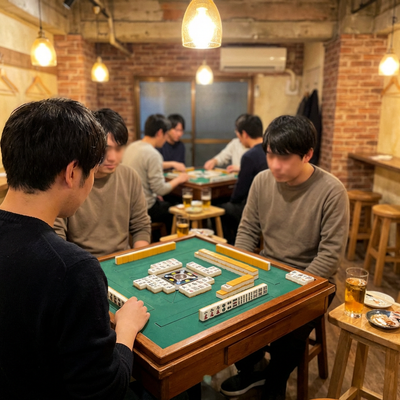
You've put in the hours on Mahjong Soul. Maybe you picked up mahjong through Yakuza or FFXIV first, got hooked, and eventually started playing ranked games online. Now you want the real thing - physical tiles, real people, the satisfying clack of a winning discard.
The jump from online to IRL is bigger than most people expect. It's not just the same game with prettier tiles. The skills transfer, but almost everything around the gameplay is different. This guide covers what actually changes, what to look for in your first set, and how to stop your tiles from collecting dust.

When you are ready to buy, our mahjong sets collection is the natural starting point.
What's Actually Different When You Play with Physical Tiles?
Online mahjong automates so much that you don't notice it until it's gone. When you sit down at a real table for the first time, you'll immediately feel the gap.
No Auto-Sort, No Highlights, No Timers
In Mahjong Soul, your tiles sort themselves. Tenpai indicators light up. Valid calls are highlighted. You have a countdown timer so you don't have to think in real time.
IRL, none of that exists. You sort your own hand (most players arrange by suit left-to-right, sequences grouped, pair on the right), you track your own tenpai, and you have to decide to call or pass in the time it takes another player to draw their next tile. There's no pause button.
Professional player Sora Niihara recommends deciding in advance which calls you're willing to make before a round even starts - not in the moment when someone discards. Think of it as pre-loading your decisions: "If I see a West tile discarded in the first few turns, I'm ponning it. Otherwise, I'm staying closed." That kind of pre-commitment is what keeps you from freezing at the table.
Manual Scoring and Point Sticks
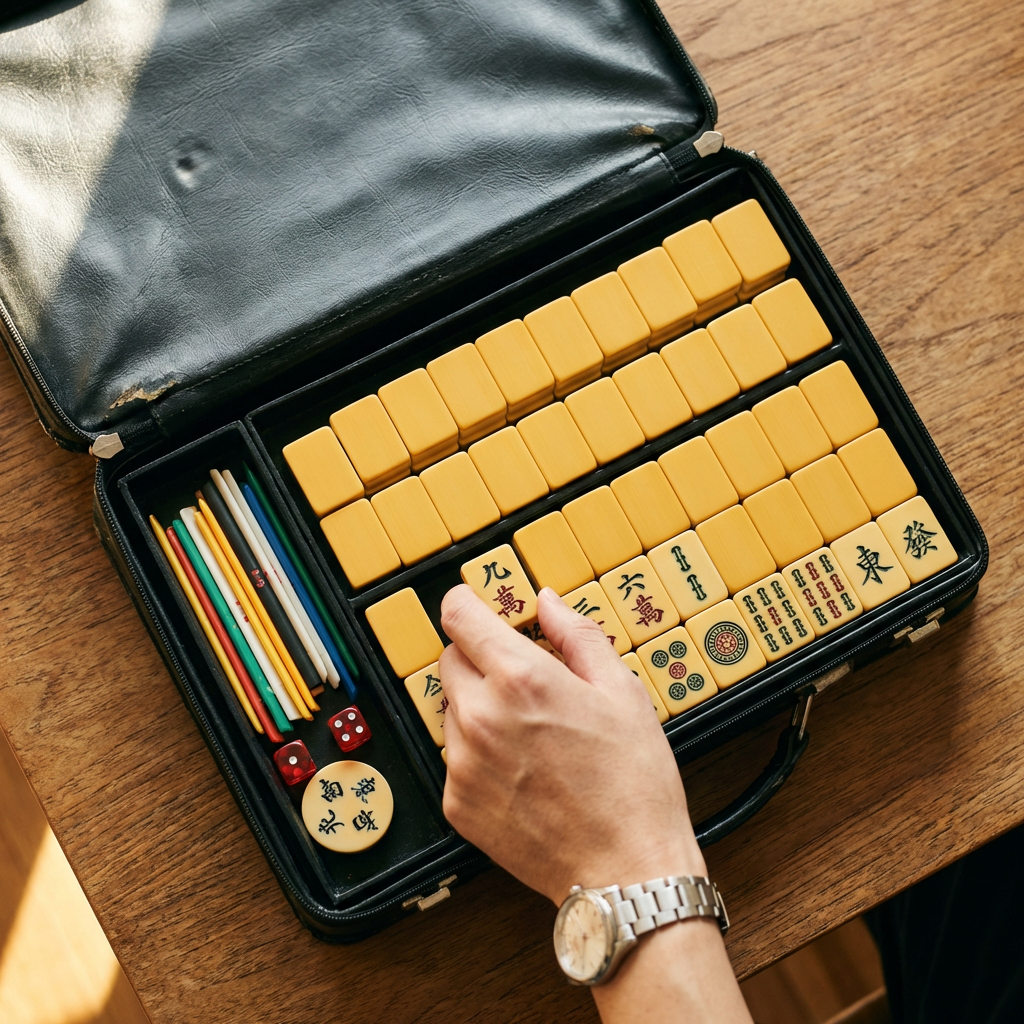
Online games calculate your score instantly. IRL, someone has to do the math - or at minimum, verify it. Point sticks (ten-bō) replace the digital counters: white sticks worth 100 points, green sticks worth 1,000, blue sticks worth 5,000, and yellow sticks worth 10,000 in most sets.
You don't need to memorize the full han/fu scoring table to play. Most groups use a scoring reference sheet or a phone app for the first year. What you do need to know is the tier structure: 3 han/70 fu and above = mangan (8,000/12,000 for non-dealer/dealer), and the progression from there to haneman, baiman, sanbaiman, and yakuman.
The Riichi Wiki scoring tables are printable and designed for exactly this purpose. Keep a copy at the table until scoring becomes intuitive.
Building and Breaking the Wall
Every game starts with shuffling tiles face-down and building the wall - 34 stacks of 2 tiles each, arranged in a square around the table. This takes about two to three minutes when everyone knows what they're doing, and five to ten minutes when they don't.
Learn to build your section of the wall quickly: one hand on each side, push tiles together into a line, stack them two high. The dice roll determines where the wall breaks and dealing begins from. This is a physical rhythm that becomes automatic after a few sessions, but feels genuinely awkward the first time.
The Etiquette Rules Online Players Often Miss
Online mahjong has no social layer. IRL, there's a whole set of unspoken rules that the community takes seriously - not as gatekeeping, but because they make the game run smoothly and feel fair.
Keep your hand hidden. This sounds obvious, but new players often tilt their racks toward other players without realizing it, especially when leaning in to look at the discard pile.
Don't react to your tiles. Sora Niihara's advice on this is blunt: "Don't show too much emotion. If you get too excited about a great starting hand, people can read that." A sharp inhale, a small smile, leaning forward - these all telegraph information. Practice a neutral face even when you're dealt something incredible.
Announce calls clearly. Say "pon," "chi," or "kan" out loud before touching any tiles. Reaching for tiles before announcing is a furikomi situation waiting to happen.
Discard to the center of the pond. Your discards go in rows in front of your hand. They should be organized enough that any player can read them. Sloppy discard ponds slow down the entire table.
Don't touch the wall until it's your turn. And don't pre-draw. It's tempting, but it disrupts the game flow and can cause confusion about whose turn it is.
Pay immediately. When someone wins, hand over your point sticks promptly and correctly. Fumbling over the math for three minutes breaks the flow of the game.
Tenpai declaration at draw.) If the game goes to exhaustive draw (ryuukyoku), you must clearly declare tenpai or noten. Show your tenpai hand face-up if you're in tenpai.
What to Look for in Your First Physical Mahjong Set?
This is where the most expensive mistakes happen. People buy the wrong set, realize it months later, and end up starting over. Here's what actually matters.
Tile Size: Why 28mm Is the Standard
Mahjong tiles come in different sizes, and for riichi, 28mm width is the community standard. It's the size the pros use, the size tournament sets are built to, and the size that feels right in an adult hand.
You'll find some beginner sets advertised with 25mm tiles (YMI's entry-level line, for example). They work, and they're cheaper, but the size difference is noticeable - 25mm feels slightly toy-like. If you're buying your first set with the intention of actually playing regularly, go 28mm.
The AMOS Max series at 28mm is considered the gold standard in the English-speaking riichi community: durable, well-weighted, beautiful tiles, includes red fives, and comes with a proper scoring stick set. It's an investment, not a casual purchase.
If you want to spend less while staying in the right range, YMI's 28mm sets are the most recommended entry-level option. They're not perfect, but they're the set most riichi clubs around the world use to lend to new members.
Riichi Set vs. Chinese Set - Don't Buy the Wrong One
This is the most common expensive mistake in the Reddit community. Chinese mahjong sets (the kind sold at Walmart, on Amazon in decorative boxes, or marketed as "traditional") are not compatible with riichi play.
The differences are significant: Chinese sets use different tiles (flowers, seasons, jokers), different scoring rules, a different number of starting points, and different calling conventions. The tile designs often don't match what you see online. Some sets even have different numbers of each tile.
A riichi set specifically includes: 136 tiles (34 types × 4 each), a complete set of red fives (aka dora - at minimum one per suit), 100 scoring sticks in four denominations, and ideally a dealer marker and wind indicators.
Red fives are non-negotiable for serious riichi play. They act as bonus dora tiles and significantly affect strategy and scoring. If a set doesn't include them, it's either a Chinese set or a very outdated riichi set - pass on it.
Essential Accessories: Mat, Scoring Sticks, and Compass
Your set likely comes with scoring sticks, but double-check the denominations and count. A standard riichi starting stack is 25,000 points per player (100,000 total), broken into 5× 10,000, 4× 5,000, 7× 1,000, 10× 500, and 10× 100.
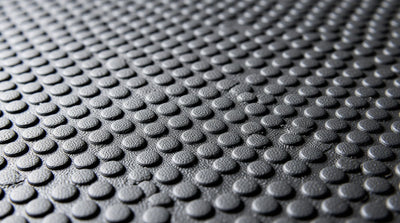
A mahjong mat isn't strictly required, but it makes a significant difference: tiles slide more smoothly for shuffling, the noise is dramatically reduced (important if you play late or in an apartment), and the mat provides a clear boundary for the discard ponds. Most serious players eventually get one.
A compass or wind indicator marker helps players track which direction is "East" at the table and rotate seat winds correctly between rounds. Some sets include them; many don't. A simple printed card taped to the table works fine when you're starting out.

How to Practice Before Your First Real Game?
If you want to feel less lost at your first IRL session, do these things before you go:
Practice building the wall alone. Get your tiles out, shuffle them face-down, and build the four-sided wall a few times. Time yourself. Aim for under two minutes per side. This removes one of the most awkward parts of your first group session.
Practice sorting tiles by hand. Deal yourself 13 tiles and sort them the way you would in a game - no digital auto-sort. Do this until you can organize a hand in under 30 seconds.
Play a solo tenpai drill. Deal 13 tiles, lay them out, and determine: am I in tenpai? If not, which tile draws would get me closest? This builds the same mental pattern recognition you've developed online, but with your hands in the loop.
Watch IRL session recordings. YouTube has full-game footage of Japanese riichi tournaments and casual games. Watching how players physically interact with their racks, announce calls, and pay points is genuinely instructive in a way that written guides can't replicate.
And then: just play. Your first game will be messy. You'll miss calls, fumble the wall, and forget to track your wind. Every experienced player at the table has been there. The learning curve steepens fast with real games behind you - see our guide on finding people to play with if you're not sure where to start.

Where to Find Your First IRL Game?
The honest answer: this is harder than buying a set, and it's the reason so many sets end up collecting dust. "I have a set but not three friends who play" is probably the most common complaint in the English-speaking riichi community.
The good news is the scene is growing. Meetup.com has mahjong groups in most major cities and a surprising number of mid-sized ones. Facebook Groups by city name + "mahjong" often turn up local clubs that don't advertise anywhere else. Game cafes, anime conventions, Japanese cultural centers, and university Japanese culture clubs are all reliable hunting grounds.
The r/Mahjong community also has a regular thread for players looking for local games. Post your city and you'll often find people within driving distance who are just as eager to find a fourth.
For a full breakdown of where to look - including Discord servers, online communities, and how to start your own group if nothing exists near you - check out our dedicated guide on finding mahjong players near you.
The tactile experience of real tiles is genuinely something else. Handling mahjong tiles for the first time - the weight, the texture, the sound of a discard against the mat - is part of why people fall in love with this game in a way that online play alone can't replicate. It's worth the effort to get there.