5 American Mahjong Setup Mistakes Beginners Make
In short. Most beginner setup problems happen before anyone draws a tile. A traditional Chinese set can be complete for its own rules and still lack the jokers American play requires, so confirm the variant, the total count and the joker count before treating any box as American-ready. Each player needs her own current NMJL card from the National Mah Jongg League; one shared card cannot serve four seats. Test that your racks fit the tiles, keep drinks and phones off the wall, and run one full setup alone before guests arrive.
Most beginner setup problems happen before anyone draws a tile. The wrong ruleset, a shared annual card or equipment that has never been tested can make a simple lesson feel confusing. A careful setup does not need many accessories, but every item should have a clear purpose and fit the rest of the table. Correct these five mistakes before the group begins building walls.
Along the way, we share what players describe in American mahjong groups on Facebook: the lessons they learned while setting up, the questions they asked and the tips they pass on to newer players.
- Using a Chinese set for American card play
- Expecting one annual card to serve four players
- Buying racks without checking tile fit
- Crowding the wall with food and personal items
- Opening the equipment for the first time with guests
1. Using a Chinese set for American card play
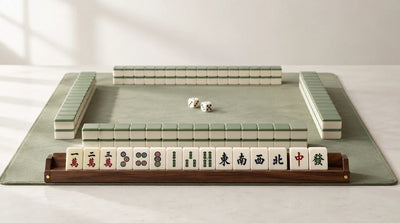
The word mahjong covers several forms of the game, so not every box contains the same tiles. A traditional Chinese set can be complete for its intended rules while lacking the jokers used in American mahjong. Beginners often focus on color and price, then discover the mismatch during the lesson. Check the product description for the variant, total count and joker count before treating any set as American-ready.
Do not solve the problem by mixing visibly different replacement jokers into the wall. A different back, thickness or shade can reveal the tile before it is drawn. If you already own a Chinese set, keep it intact for the game it was designed to support. Choose a separate American set with readable corner numbers when the group plans to use the NMJL card.
From the table: one newcomer who had wanted to learn for years was thrilled to find her first set while shopping, then learned at home that Chinese and American mahjong use different sets. "I wanted to learn forever how to play but never had anyone to play with", writes Kitty in the group Mah Jongg, That's It!, "but when I got home I found out there is Chinese and American mahjong." Another player who loves American mahjong is adding a separate Chinese set so she can learn that game too.

Classic Mahjong Set - Ochre
$70.99
A 144-tile traditional Chinese set, suitable for Chinese play rather than American card hands.
2. Expecting one annual card to serve four players
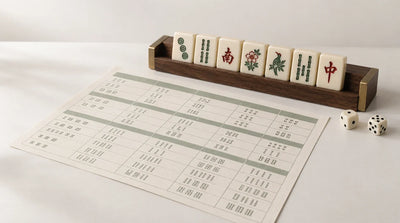
A single current card is not an efficient table resource. Four players may be scanning different categories at the same moment, and passing the card can reveal attention that should remain private. Each participant should obtain her own official current copy from the National Mah Jongg League. The Mahjong Section does not sell or reproduce it, and a tile set does not replace it.
Before the first lesson, confirm that everyone has the same year and can read the chosen size. Remove old cards from the table once the group changes seasons. If several identical cards are present, identify the owners discreetly so they do not disappear into the wrong bags. This small preparation prevents pauses in every hand.
From the table: one host who runs morning open play brings every table setup herself and asks guests for just one thing: their own card. "I bring all of the table setups, you just need to bring your card!" writes Michelle in the group Mah Jongg, That's It!. That simple request means every seat has a card from the first deal.
3. Buying racks without checking tile fit
Rack length is only one measurement. The channel width, lip height and angle determine whether tiles stand securely and whether their lower markings remain visible. Put a complete hand on the rack and rearrange it as a player would. If pieces lean, overlap or fall forward, the rack and tile set are not a working pair even if both are labeled for mahjong.
Test the pusher as well. Move a full wall across the actual mat or table and check that the hinge or attachment remains steady. Beginners need a predictable setup while learning the sequence of play. Four compatible racks reduce physical distraction and make seat rotation easier than a collection of unrelated pieces.
From the table: one player who accidentally ordered racks in the wrong size took it in stride and is treating the swap as a chance to choose a new pearly color. Another shares a simple check before buying racks: "Before buying Mahjong racks, check the LIP SIZE", writes Brent in the American mahjong groups.

Clear Mahjong Racks - Snowdrop
From $103.99
Four clear 18.5-inch racks with hinged pushers for a coordinated setup.
4. Crowding the wall with food and personal items
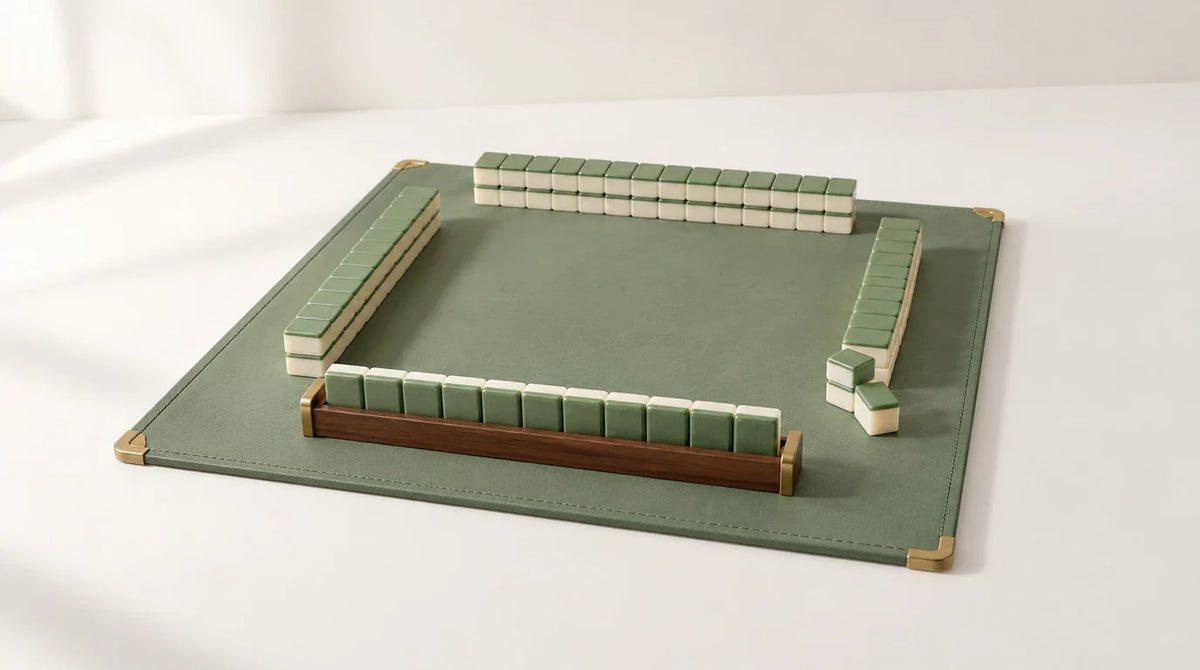
A beginner may arrange the tiles, four racks, four cards, drinks, snacks and phones on the same square without checking the space. The result is a wall that cannot move and cards that are vulnerable to spills. Define the active playing area first. Place drinks beyond the corners, move food to a side surface and give every player room to look at her rack without leaning into another seat.
A mat can help mark the tile area, but it must fit the tabletop and remain flat. Leave enough border for racks and cards rather than centering the mat solely for appearance. Test visibility from each chair after the room is lit for the evening. A calm table teaches boundaries and reduces the chance that a sleeve or glass disturbs the wall.

White Lotus Mahjong Mat - Lotus
$89
A defined playing surface with a light pattern and anti-slip backing.
5. Opening the equipment for the first time with guests
New equipment should be counted, fitted and handled before a lesson. Confirm the tile categories, inspect the backs, unwrap racks and locate dice, pushers and the wind indicator. Packaging can hide a missing piece or a mechanism that needs explanation. Discovering that problem with four beginners waiting turns a correctable detail into the main event.
Run one complete setup alone: place four racks, build the walls, move them into position and pack everything again. Note which pieces are optional and which parts of the table routine need a short explanation. Keep the current cards separate from heavy tiles and prepare a visible place for small accessories. The first group session should begin with teaching the game, not decoding the storage bag.
From the table: one brand-new player counted every tile in her set before her first game and brought her questions to the group. Another noticed her set came with ten jokers and asked how many jokers and flowers her group should use: "I am a beginner at American mahjong. Should we be using 8 flowers and how many jokers. My set came with 10 jokers." She posted the question in the group Mah Jongg, That's It!, a question worth settling before guests arrive. One host even made a short beginner guide for her friends ahead of their game night.

American Mahjong Set with Racks - Zinnia
From $174.99
An American set with 166 tiles and the main table accessories in one carrying bag.
A ten-minute rehearsal can prevent most of these mistakes. Sit in each chair, read the card under the room lighting and reach for the rack without leaning over the wall. Turn the tiles face down to look for distinctive backs, then count jokers and blanks separately. Move every pusher once and place the dice or wind marker where all four seats can see it. This is also the moment to remove unnecessary packaging and decide where empty cases will go during play.
For a first lesson, simplify rather than decorate. Use one compatible tile set, four tested racks, one current card per player and a clear surface. Explain which accessories the group will use and leave unfamiliar extras in the case. Move drinks away from paper cards and set a side table for food, phones and bags. A beginner has enough new information to process without wondering which objects are part of the rules.
After the session, ask what was hard to see, reach or understand. The answer may point to lighting, rack angle, card size or the pace of instruction rather than a need for more products. Adjust one problem at a time. A good setup feels almost invisible because it lets new players concentrate on the sequence of play and the choices in front of them.
Keep a short written inventory in the case after the first successful setup. Record the exact tile count, rack length and the small pieces stored in each compartment. The next host can reproduce the arrangement without guessing, and a missing item can be identified before the group arrives. Consistency is especially helpful while beginners are steadily building confidence.
| Setup mistake | What goes wrong | Simple correction |
|---|---|---|
| Wrong ruleset | The set lacks American jokers | Confirm variant and tile breakdown |
| One shared card | Players cannot study independently | One official current card per player |
| Unchecked racks | Tiles lean or markings disappear | Test a full hand and wall |
| Crowded surface | Walls and cards are vulnerable | Define the play area and move drinks |
| Untested equipment | Missing pieces interrupt the lesson | Run a complete setup in advance |
Keep reading: How to play American mahjong · Siamese rules for two players
Common questions
What is the most common American mahjong setup mistake?
Can four beginners share one NMJL card?
How do I test a mahjong rack?
Should I use a mahjong mat for a beginner lesson?