7 Things to Prepare Before the 2027 American Mahjong Card Arrives

In short. A new American mahjong card changes the hands, not the work around the table. Before the 2027 card arrives, plan one official card per player — they are ordered from the National Mah Jongg League, not sold with any set — and count the tiles, jokers and blanks while you wait. Test four racks and their pushers with real tiles, then plan two slower learning sessions for the new season. Keep the 2026 card for practice until the group agrees on a changeover date.
A new American mahjong card changes the hands, not the basic job of preparing the table. Before the 2027 card arrives, you can check the equipment, organize the group and decide how the first learning sessions will work. The goal is to remove avoidable interruptions so everyone can focus on reading unfamiliar combinations. These seven preparations can be completed without trying to predict what the new card will contain.
Along the way, this guide answers the questions that come up before a new card and the habits that help a table settle into a new season.
- Order one current card for every player
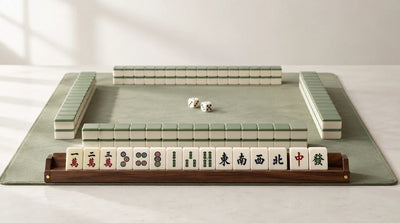
- Count the American tiles, jokers and blanks
- Test four racks and their pushers
- Choose a readable, stable playing surface
- Organize the small shared pieces
- Reset storage before adding anything new
- Plan two slower learning sessions
1. Order one current card for every player
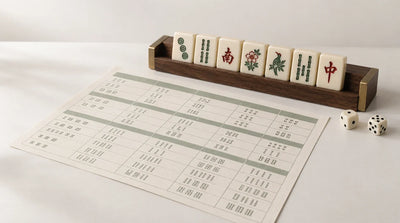
Plan for each regular player to obtain her own official 2027 card from the National Mah Jongg League. Sharing one card across the table slows decisions and makes it difficult for two players to study different sections at the same time. Confirm which card size each person prefers, collect orders early if your group coordinates them and label identical cards discreetly after they arrive. The Mahjong Section does not sell the official NMJL card, and no tile set or accessory includes it as a substitute.
Keep the 2026 card available for practice until the group agrees on a changeover date. Once play moves to the 2027 card, remove older cards from the immediate table so a player does not study the wrong year by accident. A clear start date is particularly helpful when members play with several groups. The annual card is the source for that season's hands, so your preparation should support it rather than attempting to recreate or summarize its protected contents.
From the table: The countdown to card season starts in the fall, well before the new card is in hand. Pre-orders usually open in the fall and run into January, whether your club collects orders or you order directly from the League. If you prefer to order directly, ask for the official link so you are on the League's mailing list.
2. Count the American tiles, jokers and blanks
Empty the tile case and count every category before the new season begins. Check the three numbered suits, winds, dragons, flowers, jokers and blanks, then compare the result with the maker's stated contents. A total count alone can hide a missing joker or a duplicated ordinary tile. Set aside damaged pieces and identify any tile that has become recognizable from the back, because an accidental mark can reveal information during play.
If you are replacing only the tiles, measure their height, width and thickness against the racks already used by the group. American tiles need readable corner numbers and enough jokers for the group's rules. Do not assume that every product described as mahjong is suitable for American play. Traditional Chinese sets usually have a different composition and do not provide the jokers used with the NMJL card.

American Mahjong Set 166 Tiles - Bluebell
$172.99
A 166-tile American set with corner numbers, 10 jokers and 4 blanks.
3. Test four racks and their pushers
Place a full practice hand on each rack and move every pusher through its normal range. Look for a loose hinge, a warped channel or an edge that catches the wall. Four matching racks make seat changes easier, but function matters more than color. The tile faces should remain visible above the lip, and the channel should hold them upright without requiring pressure. Test with the actual tiles rather than relying only on published rack measurements.
Pushers help move a completed wall without reaching across the center, so confirm that all four players can use the mechanism comfortably. If the group mixes racks from different sets, decide whether the variation causes a real problem before replacing them. A stable mixed set may be more useful than an attractive new set with channels that do not fit the tiles. Clean acrylic with a soft cloth and follow the maker's care instructions before the first session.

Acrylic Mahjong Racks - Larkspur
From $114.99
Four 18.5-inch acrylic racks, each paired with an attached pusher arm.
4. Choose a readable, stable playing surface
A mat should make tiles easier to mix and lift while keeping the wall stable. Measure the usable tabletop and leave room around the mat for racks, cards, drinks and personal items. The pattern should not compete with small tile markings, especially when the group is spending more time reading a new card. Check the surface in the lighting used for evening games, since a calm design in daylight can feel busier under warm lamps.
Inspect the backing before the season begins. A mat that slides as players push walls can create more trouble than a bare table. Smooth the mat flat, clean the table underneath and verify that the corners do not curl into a player's space. If you host at several locations, record the mat's rolled dimensions and choose a protective sleeve rather than folding it into a bag where creases can develop.

White Lotus Mahjong Mat - Lotus
$89
A white floral mat with a velvet-touch surface, stitched edge and anti-slip backing.
5. Organize the small shared pieces
Gather dice, the wind indicator, spare blanks and any scoring pieces in one visible pouch or compartment. Small accessories are easy to overlook because they are not required to read the new card, yet searching for them delays the first hand. Confirm what your group actually uses and remove unrelated pieces from the case. A clearly marked wind indicator gives the table a single reference and keeps the center less cluttered than several improvised markers.
Readability is the main test. Players should be able to see the selected wind from their seats without lifting the marker. For dice, check that the markings contrast with the background and that all required pieces are present. Avoid adding decorative accessories merely because a new season is starting. The best setup contains enough tools to support the group's routine and no extra system that must be explained alongside the new card.

Mahjong Wind Indicator - Cypress
From $45.99
A marked wind cube with a choice of gold acrylic or wooden holder.
6. Reset storage before adding anything new
Use the pre-season count as a chance to clean and reorganize the case. Keep dense tiles from pressing against delicate racks, cards or accessories, and give every category a repeatable place. A clear pouch can make the tile set recognizable without opening every bag, which is useful when a host owns several colorways. Check zipper strength and capacity with the complete group of tiles rather than estimating from one piece.
Store the new 2027 cards flat and away from drinks. Do not force them into a compartment that bends the corners, and do not leave them loose against tile edges. If the set travels, lift the packed bag once and listen for movement. Padding or separate pouches should stop heavy tiles from shifting into small pieces. Good storage makes both setup and the final count quicker at every game.

Clear Mahjong Tile Bag - Papyrus
$74.99
A zipped tile pouch with a clear window for identifying the set inside.
From the table: Cards can outlast their season and become a collection. Older League cards are still sought after years later, and a complete run is built one season at a time. Stored flat and dry, this year's card can become part of a collection like that.
7. Plan two slower learning sessions
Treat the first meetings with the 2027 card as learning sessions rather than ordinary fast games. Agree that players may take longer to scan categories, compare concealed and exposed options and notice notes printed on the card. Set a comfortable finishing time and avoid squeezing the first session into a short window. A calm pace helps the group build familiarity without turning every decision into a public lesson.
Before play, let each person review the official card independently and mark no permanent notes on a shared copy. During the game, keep explanations focused on general rules and on what the card itself shows. Afterward, ask which categories were difficult to locate and adjust seating, lighting or card size if visibility was the problem. Preparation is successful when the equipment disappears into the background and the group can concentrate on the new hands.
From the table: A simple plan for getting up to speed on a new card starts with reading the back to see whether anything has changed. Then settle the question every new player asks: when does the table switch to the new card? Each club usually decides for itself, which is why agreeing on a date together helps.
| Preparation | Why it matters | Check before card season |
|---|---|---|
| Official cards | Every player can study independently | Order source, size and owner |
| American tiles | The listed hands need the correct tile mix | Categories, jokers, blanks and damage |
| Racks and pushers | Walls move without reaching | Fit, stability and hinges |
| Playing surface | Tiles stay readable and controlled | Table size, grip and lighting |
| Small pieces | The first hand starts on time | Dice, indicator and shared routine |
| Storage | Equipment travels without damage | Capacity, separation and closures |
| Learning plan | The group can adjust to new hands | Pace, date and session length |
Keep reading: Our American mahjong quick reference
Common questions
Where should I get the 2027 American mahjong card?
Do I need new tiles when the 2027 card arrives?
Should a group keep using the 2026 card?
What should I test before the first 2027 game?