7 Differences Between American and Chinese Mahjong Tiles
In short. American and Chinese mahjong share the same suits, winds and dragons, but their sets are not interchangeable. American sets are often sold at 160 or 166 tiles against 144 for a traditional Chinese box, and the jokers that drive American card play are normally absent from Chinese sets. Corner numbers and lettered winds mark American tiles, while Chinese faces rely on traditional characters. American play also runs on racks, pushers and the current annual NMJL card instead of regional rules.
American and Chinese mahjong share familiar suits, winds and dragons, but their tile sets are not interchangeable by default. The most important differences concern the tile layout, jokers, markings and the equipment used around the wall. Regional Chinese rules also vary, so one Chinese set cannot represent every table. Use these seven checks to identify what a product is designed to support before choosing it for a group.
Along the way, we cover the sets worth comparing, the questions that come with moving between the two games and the details that only show up once the tiles are on the table.
- The total and category breakdown differ
- American mahjong uses jokers
- Corner numbers are more common on American tiles
- Tile dimensions and hand feel can change
- American play commonly uses racks and pushers
- Flowers, seasons and blanks have different roles
- American tiles are used with a current annual card
1. The total and category breakdown differ
American sets are often sold with totals such as 160 or 166, while a traditional Chinese set may contain 144 tiles. The total is only a starting point. Count the suits, winds, dragons, flowers, jokers and blanks separately because two sets with similar totals can be intended for different games. Product descriptions should state the full breakdown rather than expecting a buyer to infer it from the case size.
Chinese mahjong includes regional variations, and groups may use flowers, seasons or extra tiles differently. Ask which rules the recipient plays before buying. For American mahjong, compare the listed American layout with the group's needs and confirm how many spares are included. A deliberate category count matters more than finding one supposedly universal total.

American Mahjong Set with Racks - Zinnia
From $174.99
A 166-tile American set with the main accessories used around an American table.
2. American mahjong uses jokers
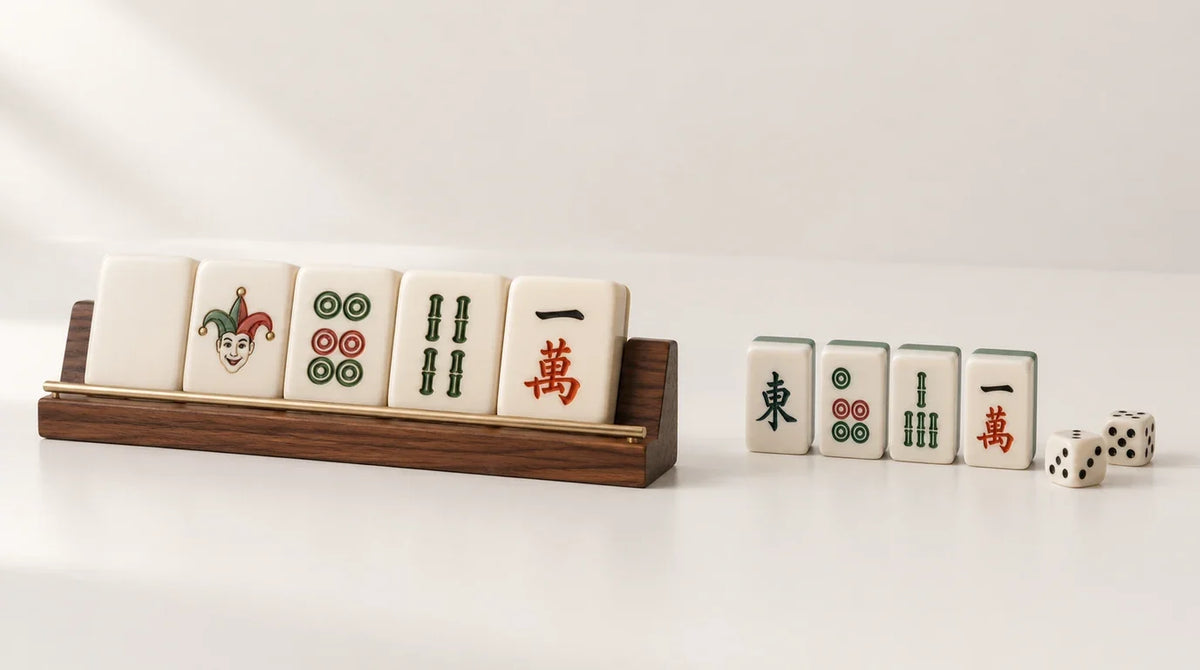
Jokers are a defining practical difference for a shopper. American card play uses jokers according to its rules and the current annual card, while traditional Chinese sets normally do not include them. A box without jokers may be complete for Chinese play and still be unsuitable for an American group. Always look for an explicit joker count rather than relying on the word mahjong in the title.
Adding loose jokers later works only when their backs, dimensions, thickness and material are indistinguishable from the rest of the set. A visibly different replacement can reveal information before it is drawn. Buying an American set with its intended jokers avoids that problem and keeps wear consistent across the wall.
From the table: a hand-carved Chinese set can be adapted for American play, because the carver adds jokers and number notations so the tiles can be read against the annual card. It is the most personal route to a set, and worth confirming the joker count and the markings before the work starts.

American Mahjong Set 166 Tiles - Bluebell
$172.99
A tiles-only American set with 10 jokers, 4 blanks and readable corner indices.
3. Corner numbers are more common on American tiles
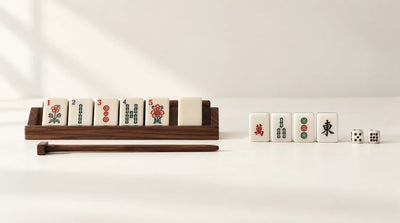
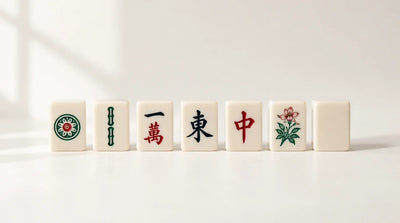
American tiles commonly add Arabic suit numbers and English wind letters near the corners. Those indices help players identify characters and winds while reading the annual card. Traditional Chinese tiles may rely on the original characters and imagery, which experienced players recognize directly. Neither approach is decorative by accident: the markings reflect the audience and way the set is expected to be read.
For a mixed-experience group, test visibility from the far seat. Small indices, pale engraving or a busy face can slow play even when the photograph looks clear. A learner who wants Chinese mahjong may prefer indexed Chinese tiles, but should still choose a set with the correct Chinese layout. Readability and ruleset are separate checks.
From the table: the Characters suit is where the two traditions read most differently, since each Chinese tile carries a Chinese numeral while American sets add the Arabic numeral beside it. If a Chinese-style set is headed for an American table, sort out how the characters translate to the card and what the letters on some tiles stand for.

Classic Mahjong Set - Ochre
$70.99
A 144-tile Chinese set with traditional character-based faces and a compact format.
4. Tile dimensions and hand feel can change
Many American tiles are large enough to benefit from racks, while compact Chinese tiles are often stood directly on the table. This is a tendency, not a guaranteed standard. Measure height, width and thickness because labels such as large, standard or travel are not consistent across makers. Larger faces can improve visibility but require more wall space and add weight to the carrying case.
Smaller tiles suit compact tables and travel, yet they may be difficult for players with limited vision or hand mobility. Natural stone and wood also feel different from acrylic or melamine. Consider the surface beneath them because hard, heavy tiles can be louder and more vulnerable to impact. The right dimensions are those the group can read, mix and store comfortably.
From the table: a comparison of tile height, width and thickness across makers, standard and travel sets included, settles more arguments than any product photo. Lining up two sets on identical racks, or side by side, is the quickest way to see a size or color difference before you order.
5. American play commonly uses racks and pushers
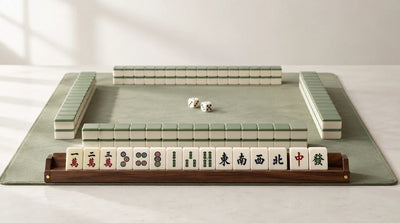
American players normally arrange their hands on racks and use pushers to move completed walls. Many Chinese games are played without full-length American racks, with tiles standing on their own. A Chinese set therefore may not include racks, and a compact tile may sit loosely in a channel made for a larger American piece. Included accessories are not proof that two systems match.
If racks are needed, load a full hand and make sure faces remain visible above the lip. Then build a wall and move it with each pusher. Check all four player positions, not one display sample. Compatibility between tile thickness and channel width matters more than coordinating colors.
From the table: players coming from Asian styles notice two things in their first week of American mahjong: the tiles are narrower, and the racks do the work the table used to do. That follows the rules rather than the fashion, since racks and pushers exist to hold a standing hand and move a wall built two high.

Mahjong Racks with Pushers - Larch
From $96.99
Four 18.5-inch racks with built-in pushers for organizing hands and moving walls.
6. Flowers, seasons and blanks have different roles
In Chinese play the flowers and seasons are bonus tiles: you set them aside face up and draw a replacement. American play keeps its eight flower tiles inside the hand, where the card patterns treat them as ordinary tiles. American sets may also include blanks as spare or replacement pieces. Do not assume that similar artwork means the tile serves the same function. Read the maker's key and learn the rules used by the group.
When buying secondhand, separate every bonus tile and inspect the backs. A borrowed flower from another set can be visually marked even if its face is correct. Keep spare blanks labeled outside the active wall until the group decides how they are used. A complete inventory prevents an attractive mixed set from creating confusion.
From the table: flowers and seasons are the tiles new owners sort out first, unsure which belong in the set and which are extras, and the maker's key is what settles it. Blanks come next: they are the most debated tiles at the table, with some groups playing them and others leaving them in the case.
7. American tiles are used with a current annual card
American mahjong relies on the official annual National Mah Jongg League card for the hands played that season. Chinese mahjong does not use that annual American card. The card is purchased separately from the NMJL and is not included merely because a product is described as an American set. Each American player should have her own current copy.
This distinction affects shopping. An American beginner needs both suitable equipment and instruction in using the card, while a Chinese beginner needs guidance for the regional rules being taught. Choose the rules first, then the tiles. Appearance, storage and accessories become useful decisions only after that foundation is clear.
From the table: a secondhand or inherited set often arrives with more than tiles, since older cards tucked inside date the box and the racks show what the original owner played. Sort the whole case before buying anything new, because cards, racks and spares are what a mixed set is usually missing.
The safest buying sequence is rules, tile layout, readability, dimensions and then appearance. Ask the group which form of mahjong it plays, verify every tile category and measure the intended storage and table. This order prevents a color preference from turning into an expensive ruleset mismatch.
If a household plays both forms, keep the sets and their small pieces in clearly labeled cases. Do not borrow tiles between them unless every physical detail matches and the group understands the change. Separate inventories protect both games and make setup faster.
| Feature | American tiles | Chinese tiles |
|---|---|---|
| Typical product total | Often 160 or 166 | Often 144, with regional variation |
| Jokers | Expected for card play | Usually not included |
| Indices | Corner numbers and wind letters common | Traditional characters often primary |
| Racks | Commonly used | Often played without American racks |
| Bonus tiles | American layout and blanks vary | Flowers and seasons vary by rules |
| Reference | Current annual NMJL card | Regional rules, not the NMJL card |
Keep reading: Why an American set needs jokers
Common questions
Can Chinese mahjong tiles be used for American mahjong?
Why do American mahjong tiles have numbers?
Do Chinese mahjong players use racks?
Does an American tile set include the NMJL card?