How to Store and Carry Mahjong Tiles Safely

In short. Good storage keeps one complete set together and heavy tiles away from racks and paper cards. A fitted clear box identifies the colorway without opening cases, a wooden case suits a set that stays in a game room, and a zipped pouch or structured organizer separates rows so a missing category shows up quickly. When the whole setup travels, use a dedicated tote and separate sleeves for long racks and pushers. Count the tile categories and measure one tile in three directions before buying anything.
Mahjong tiles are dense, numerous and easy to mix with pieces from another set. Good storage keeps the complete group together, protects readable faces and prevents heavy tiles from striking racks or paper cards. The best option depends on tile dimensions, total count and how often the set travels. These seven approaches range from visible shelf boxes to full game-night bags.
Along the way, we share what players describe in American mahjong groups on Facebook: the storage ideas they tried and the habits that keep their sets complete between games.
- Use a fitted clear box for visible shelf storage
- Choose a wooden case for protected display
- Keep tiles in a clear zipped pouch
- Use a structured organizer for grouped pieces
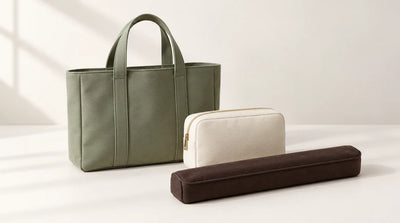
- Pack a full setup in a dedicated tote
- Use the original case when it still fits securely
- Create separate sleeves for racks and long pieces
1. Use a fitted clear box for visible shelf storage
A transparent box lets an owner identify the colorway without opening several cases. A fitted layout also keeps rows upright and prevents the tiles from spreading across a large compartment. Measure the complete group, not one tile, and check the stated capacity against the actual count.
Inspect the closure and lift the packed box over a soft surface before regular use. A sliding lid should remain secure without pressing on tile faces. Use the lower compartment only for accessories that fit without pushing upward into the rows above.

Acrylic Mahjong Box - Birch
$105.99
A clear sliding-lid box designed to hold up to 160 American tiles with a lower compartment.
From the table: clear display storage is a favorite topic in the groups. "If you are looking for tile display storage at a reasonable price, Target has their gallon jars (with lids) on sale for $10 and half gallon for $6," writes Mandie in Mahjong Tablescapes™. Another member, once her jars arrived, had fun setting them beside different mats: "I finally got my Gallon Size Jars for Mahjong Tiles! I switched out some mats and tried a few combinations."
2. Choose a wooden case for protected display
Wooden storage suits a set that stays in a game room and deserves a more traditional display. Rigid sides protect the contents from shelf pressure, while a handle can make short moves easier. Check internal dimensions, empty weight and latch strength before relying on the case for transport.
Keep the case dry and away from large temperature changes. Natural materials can react to humidity, and a heavy loaded box should be lifted by its base rather than swung by the handle. Add only acid-free, non-abrasive padding when needed.

Wooden Mahjong Case - Umber
$138.99
A handled wooden case with internal organization for a complete tile group.
From the table: one player found a home for her sets in a piece of furniture made by family. "But this coffee bar Chris uncle built was perfect for my mahjong display/storage," says Kayla. She already has a few touches planned to give it "more of a girly flair."
3. Keep tiles in a clear zipped pouch
A zipped pouch is flexible and easy to place inside a larger tote. A clear window reveals the set without exposing it to dust or requiring labels on every bag. Strength matters because a full tile group is much heavier than clothing or cards.
Check zipper teeth, seams and carrying points with the pouch fully loaded. Do not suspend it over a hard floor until the materials have been tested. Keep sharp rack edges and loose pushers outside the tile pouch so they cannot scratch faces during travel.

Clear Mahjong Tile Bag - Papyrus
$74.99
A clear-window zipped pouch for identifying the tile set inside.
4. Use a structured organizer for grouped pieces
An organizer with internal structure helps keep rows or subgroups from collapsing into one pile. This can speed the final count and make a missing category easier to notice. Match the compartment size to the tile dimensions so dividers do not bend or create pressure points.
Label the set and record its intended breakdown inside the bag. Avoid dividing tiles in a way that encourages the group to mix from incomplete sections. All active pieces should return to one confirmed inventory before storage.

Clear Mahjong Bag - Coir
From $69.99
A clear organizer offered in sizes for separating and carrying mahjong tiles.
From the table: jewelry and cosmetic drawers come up again and again. "For $20 I am storing 4 sets in drawers," one player wrote, adding that she simply slides a drawer out to play and that the tiles must be neatly placed inside to fit. Another, who often teaches friends, keeps her tiles laid out in order: "laying out the tiles in an organized display allows newbies to get a good look at each suit before starting."
5. Pack a full setup in a dedicated tote
A dedicated tote works when the entire setup travels regularly. Separate zones for tiles, racks and small accessories reduce contact between heavy and fragile pieces. Confirm that handles are attached for the loaded weight and that the bag remains balanced when lifted.
Keep the annual cards in a flat protected sleeve rather than beside tile edges. Put dice and the wind indicator in a closed inner pouch, then count them before leaving. A packing checklist attached inside the tote makes host changes easier.

Mahjong Bag Set - Sedge
$115.99
A coordinated tote set with a tile pouch and rack sleeve for game-night transport.
From the table: one player was delighted with how her travel set packs. In her words, the mat "comes with a storage sleeve but it also fits in the bigger pouch, along with the racks and the tiles," writes Shaula in the group Mah Jongg, That's It! One bag that holds everything is the simplest packing checklist of all.
6. Use the original case when it still fits securely
The original case is often the best storage when its inserts still support the tiles and its closure remains sound. It preserves the maker's intended layout and usually fits the count without wasted space. Do not discard it simply because a decorative bag looks newer.
Inspect old foam, elastic and lining for crumbling or dye transfer. Replace deteriorating material with a safe option recommended for the tile material. If the latch opens when lifted, treat the case as shelf storage only or place it inside a secure outer bag.
From the table: one player looking for a new case for her parents' vintage tiles wanted the same features their well-loved original case had. "Prefer similar case that is portable and where tiles are packed in trays or layers and not rattling around," she wrote. The case a set came with is often the best guide to what it needs.
7. Create separate sleeves for racks and long pieces
Racks and pushers need different protection from tiles. Long acrylic parts can bend, scratch or crack when a dense pouch shifts against them. A dedicated sleeve keeps the four pieces aligned and makes their count obvious during cleanup.
Measure the rack length including attachments. Detachable pushers should have a pocket where they cannot slide out, while hinged arms should be stored in the position recommended by the maker. Do not force an extra-long rack into a short soft sleeve.

Mahjong Rack Storage Bag - Heather
$64.99
A padded rack storage bag that keeps long pieces away from dense tiles.
Before selecting storage, count the tile categories and measure one tile in three directions. Add the full group weight, rack length and the dimensions of the current annual cards. Those facts separate a fitted solution from a bag that merely looks large.
Use the same packing order after every game: count tiles, secure small pieces, protect cards, sleeve racks and close the main container. Check beneath the mat and chairs before the bag leaves the room. Repetition prevents most losses.
For long-term storage, choose a dry, stable indoor location away from direct sun and extreme heat. Follow care guidance for acrylic, melamine, wood, stone or other materials. A case protects only what is clean, dry and packed without pressure.
If a set is used only a few times a year, inspect it before storing it again. Look for moisture, weakened seams, tarnished hardware or foam that has begun to crumble. Early maintenance is easier than cleaning residue from an entire tile group after months in a closed case.
For households with more than one set, use an external label that names the colorway, ruleset and tile count. Keep a small photograph of the complete layout inside. This avoids mixing American jokers, Chinese bonus tiles or similar blanks during a rushed cleanup.
Before closing any container, place it on a stable surface and confirm that every zipper, latch and handle works under the full load. Never test a doubtful closure above a hard floor.
| Storage method | Best for | Check first |
|---|---|---|
| Clear box | Visible shelf storage | Tile capacity and lid |
| Wooden case | Protected home display | Weight and latch |
| Clear pouch | Simple inner storage | Seams and zipper |
| Organizer | Separated rows | Compartment fit |
| Dedicated tote | Weekly travel | Loaded handle strength |
| Original case | Maker’s intended layout | Aging inserts and closure |
| Rack sleeve | Long accessories | Length and pusher pockets |
Keep reading: What to add beyond the tiles
How to Store and Carry Mahjong Tiles Safely
A good storage plan keeps your equipment organized and easy to set up. Start with the dimensions and weight of everything you actually transport.
Inventory before packing
Count the tiles and small accessories against the product listing. Check that the case or trays can hold the set securely. Avoid loose tiles rattling against one another when the bag moves.
Pack by shape and fragility
Place tiles in fitted compartments or trays when available. Keep long racks and pushers away from heavy objects that could bend or crack them. Store dice, wind indicators and small parts in closed pouches or compartments.
Measure the complete packed setup
A bag may fit the tiles but not the racks, mat and card holder. Measure length, width, height and total weight with all intended accessories included. Compare those values with the bag's published dimensions and capacity; do not rely on “universal fit.”
Consider how you travel
If you walk or use public transit, overall weight and carrying comfort matter. If you rotate homes with friends, quick unpacking and a clear inventory may be more valuable than decorative packaging.
Storage between games
Follow the manufacturer's material-specific care instructions. Keep items dry before storage, and avoid pressure on delicate components. Do not force a mat into a fold if its care guidance recommends rolling.
Packing checklist
- [ ] Full tile inventory counted
- [ ] Tiles secured in appropriate compartments
- [ ] Racks/pushers protected from pressure
- [ ] Small accessories contained
- [ ] Mat stored according to its care instructions
- [ ] Bag dimensions and capacity verified
- [ ] Total packed weight considered
- [ ] Nothing rattles or strains when carried
Explore Mahjong bags and accessories, checking exact product specifications before purchase.
If your current storage already works well, there is no reason to replace it.
How to store Mahjong tiles between game nights
Count and secure the tiles, separate fragile racks and small accessories, and follow manufacturer storage guidance.
How to carry a heavy Mahjong set
Measure the full packed setup and consider weight, carrying comfort and how often the set travels. Link to the existing storage article for the broader intent.
Common questions
What is the safest way to store mahjong tiles?
Can mahjong tiles be stored in a soft bag?
Should racks be stored with the tiles?
Where should mahjong tiles be stored long term?