American Mahjong Rules PDF
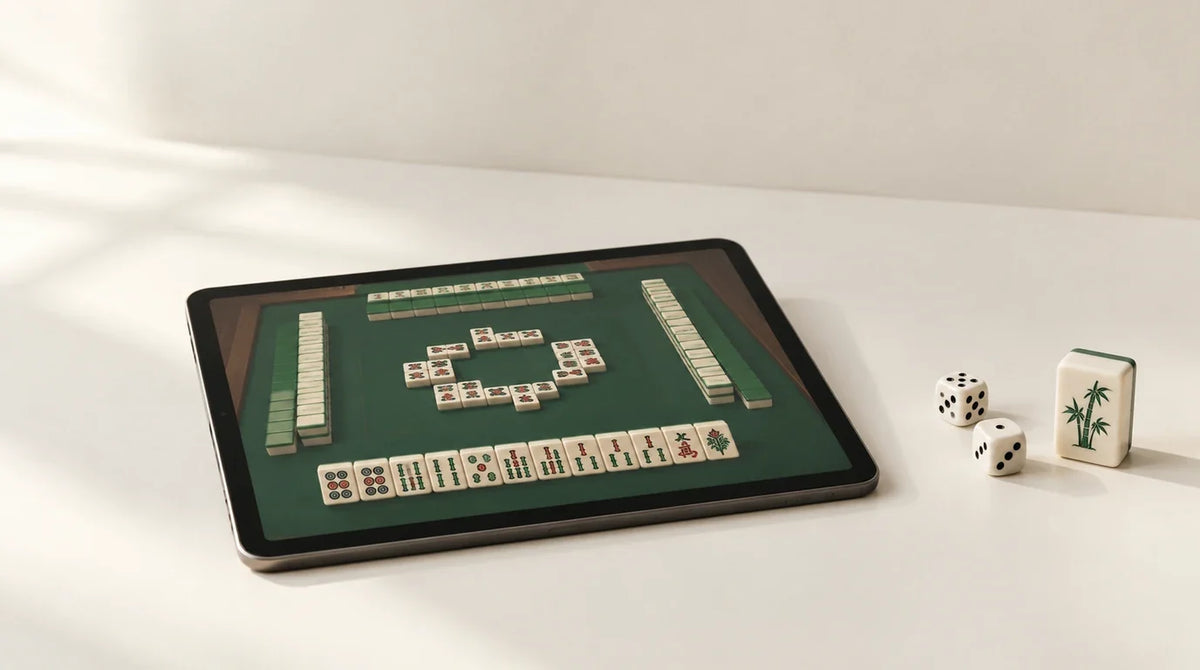
In short. American mahjong uses 152 tiles, eight of them jokers and eight flowers, though modern sets often carry 160 or 166. Winning means completing a fourteen-tile hand that matches the annual NMJL card exactly; most hands score 25 to 75 points, and a hand with no jokers at all earns a bonus. Jokers fill pungs, kongs, quints and sextets but never pairs or singles. Payouts double when you draw the winning tile yourself.
Does the intricate dance of the Charleston and the specific tile counts of a modern set leave your table in a state of confusion? Mastering the transition from drawing tiles to declaring a win requires a firm grasp of the unique mechanics that define this social classic. Many players struggle to keep the specific limits of jokers and the hierarchy of calls straight during the heat of a fast paced game.
This guide provides a comprehensive american mahjong rules pdf reference to keep beside your rack, covering everything from the deal to winning hands. We clarify the essential role of the National Mah Jongg League card, which must be purchased directly from the NMJL, to help you navigate every round with confidence.
- American Mahjong Rules PDF: The Foundation of a Social Classic
- How Does the Charleston Exchange Work?
- The Annual Card: Decoding the Logic of Winning Hands
- Table Mechanics: The Rhythmic Flow of a Live Game
- Declaring Mah Jongg: The Final Push Toward Victory
American Mahjong Rules PDF: The Foundation of a Social Classic
American Mahjong is played with 152 tiles, including eight jokers and eight flowers. Success depends on mastering the Charleston exchange and matching hands to the National Mah Jongg League’s annual card patterns.
Understanding these specific tile counts is the first step toward a smooth afternoon at the table.
Standard Tile Counts and Modern Variations
While 152 tiles serve as the traditional baseline, modern sets often include 160 or 166 pieces. These variations provide flexibility for different house rules.
Extra jokers and blank tiles fill these larger sets. They serve as replacements or specialized wildcards during play.
Do not assume 152 is the only way. Always verify your set count before starting.

Identifying Suits and Special Dragon Tiles
The game features three suits: Dots, Bams, and Craks. Each suit runs from numbers one through nine in sequence.
Dragons associate with specific suits. The Green Dragon typically pairs with Bams, while Red pairs with Craks.
The White Dragon, or Soap, acts as a zero. It is vital for numeric hands on the card.
The Strategic Value of Jokers and Flowers
Jokers are powerful but restricted. You cannot use them for pairs or singletons. They only work for pungs, kongs, quints, or sextets.
Flower tiles are a category of their own and are never wildcards. They are essential for many winning hands.
Standard sets include eight of each. This balance keeps the gameplay competitive for everyone.
Please note that the National Mah Jongg League publishes the annual card itself, so this page is a rules reference rather than a copy. Explore our curated selection of American Mahjong sets for your next gathering.
How Does the Charleston Exchange Work?
Once you understand the tiles, you must master the Charleston, a unique tile-swapping ritual that defines the American game's opening strategy.

The Mandatory First Charleston Sequence
The first round requires three distinct passes. You pass three tiles to the right, then across, and finally to the left. This movement circulates tiles rapidly across the entire table.
During the final "left" pass, players can opt for a blind pass. This means moving one to three tiles without looking at them first. It helps hide your strategy from others.
Never pass a joker. It is illegal and ruins the integrity of the exchange process.
The Second Pass and Courtesy Rules
A second round occurs only if all four players agree. If one player declines, the Charleston ends immediately there.
The passing order reverses in this second phase. You pass to the left, then across, and finish with the right. This ensures a different distribution of tiles and forces players to adapt quickly.
The final courtesy pass is optional. Players trade between zero and three tiles with their opposite neighbor.
Organizing the Rack for Efficient Exchanges
Speed is key during the Charleston. Sort your tiles by suit and number immediately. This visual organization helps you spot potential patterns on the annual card before the game begins.
Keep your "trash" tiles on one side of the rack. This makes selecting three tiles for the next pass much faster. It also prevents accidental passing of tiles you actually need.
- Group tiles by suit
- Keep identical numbers together
- Separate jokers and flowers
- Place discard candidates on the far right
Plainly, the National Mah Jongg League publishes and sells the annual card itself, so the card is not reproduced here, and this page is a rules reference rather than a copy of the card. While you prepare your strategy, explore our inviting collection of American mahjong sets, available in 160 or 166 tile configurations.
The Annual Card: Decoding the Logic of Winning Hands
While the Charleston builds your hand, the official annual card dictates exactly which combinations will actually lead you to victory.

Understanding Color Coding and Abbreviations
Colors on the card do not match your physical tiles. They represent different suits to show variety. If a hand has two colors, use two different suits to complete it.
Learn the shorthand to read the card effectively. "F" stands for flowers and "D" represents dragons. Parentheses carry conditions for the hand, such as "any 2 suits."
Misinterpreting these symbols leads to dead hands. Study the legend at the bottom of the card.
Defining Pungs, Kongs, and Quints
A pung consists of three identical tiles. A kong expands this to four identical tiles of the same suit.
American rules include quints and sextets. These are groups of five or six identical tiles, usually requiring jokers. They offer higher point values. These groupings are unique to this version of the game.
Note that NEWS is a special sequence. It is not a kong because the tiles are different.
Ordering the Official Card from the League
You must buy the card from the National Mah Jongg League. They release a new version every spring with updated hands. This keeps the game fresh and challenging for veterans.
Local retail shops rarely carry the official card. It is a proprietary document protected by the league. Most players order several copies for their entire weekly gaming group at once.
Use their official website for orders. Mail-in forms are also available for those who prefer traditional methods.
Our curated selection of American mahjong sets provides the perfect foundation for your next game night.
Table Mechanics: The Rhythmic Flow of a Live Game
With your card in hand and the Charleston complete, the focus shifts to the physical mechanics of drawing and discarding tiles at the table.
Building the Walls and Dealing Tiles
Players build four walls of tiles. Each wall is nineteen tiles long and two tiles high. This creates a square perimeter for drawing.
The dealer rolls dice to break the wall. Tiles are distributed in blocks until everyone has thirteen. The dealer starts with fourteen tiles.
The dealer role passes to the right, counter-clockwise. This ensures everyone takes a turn managing the initial game flow.
The Cycle of Drawing and Discarding
You draw a tile from the wall and then discard one. You must name the discarded tile clearly aloud.
There is a brief window for others to call the tile. If no one speaks, the next player draws. The game moves counter-clockwise.
Proper etiquette requires waiting for the discard to hit the table. Do not rush the current player.
Calling Discards and Handling Multiple Claims
To claim a discard, you must verbally call it immediately. This allows you to complete an exposure. You cannot call a pair unless it wins.
If two people call the same tile, priority matters. A call for "Mahjong" always beats a call for a pung or kong.
| Scenario | Priority Winner | Rule Explanation |
|---|---|---|
| Mahjong vs Pung | Mahjong Caller | Victory always takes precedence over a standard exposure. |
| Pung vs Pung (Next) | Next Player | The player closest to the discarder's right wins. |
| Pung vs Pung (Distal) | Next Player | Table position dictates priority for identical set claims. |
| Quint vs Pung | Nearest in Turn | Exposure calls are decided by turn order, never by set size. |
You can find a beautiful selection of tiles and racks in our latest mahjong collections to elevate your next game night.
Declaring Mah Jongg: The Final Push Toward Victory
The game reaches its peak when a player finally assembles their fourteenth tile and prepares to declare a win.
Winning Conditions and Declare Protocols
You win by completing a fourteen-tile hand that matches the card exactly. You must announce "Mah Jongg" clearly. Then, you place all your tiles on top of the rack for inspection.
Scoring depends on the difficulty of the hand. Most hands range from 25 to 75 points. You earn a bonus if your winning hand contains no jokers at all.
Payouts are usually doubled if you draw the winning tile yourself. This adds excitement to the draw.
Identifying Dead Hands and Common Errors
A hand becomes "dead" if it has the wrong tile count. This often happens after a missed draw or incorrect discard. Exposing a hand that does not exist on the card also results in a dead hand. It is a common mistake.
Once your hand is dead, you stop playing. You do not draw or discard anymore. You still pay the winner.
Common errors include:
- Incorrect tile count
- Illegal joker usage
- Calling for a pair incorrectly
- Misinterpreting card colors
The Bettor Role in Five Player Games
In five-player games, one person acts as the bettor. They do not hold a hand but watch the others play. The bettor chooses one player they think will win the round.
The bet must be placed after the Charleston and before East's first discard. If the chosen player wins, the bettor collects what that player collects. If the player loses, the bettor pays the winner the same amount.
This role rotates every round. It ensures everyone stays involved in the social aspect of the game.
Explore our curated selection of high-quality tile sets to bring these rules to life at your next gathering.
Mastering the Charleston and the 152-tile set prepares you for an engaging game. Keep this american mahjong rules pdf reference handy to navigate jokers and annual card logic with confidence. Start your next session today and enjoy the social thrill of a perfectly timed victory.
Common questions
How many tiles are included in a standard American mahjong set?
A traditional American mahjong set typically features 152 tiles, which includes the standard suits, winds, dragons, eight flowers, and eight jokers. This count is higher than the Chinese version due to the addition of these specialized wildcards that are essential for modern gameplay.
However, it is quite common to find modern sets containing 160 or 166 tiles. These larger sets often include extra jokers or blank tiles that serve as replacements or allow for specific house rule variations. You should always verify the total count of your specific set before beginning a game to ensure all necessary pieces are present.
Where can I purchase the official annual score card?
The annual card is a proprietary document that features the winning hand combinations for the current year. It is published and sold exclusively by the National Mah Jongg League. Because this card is protected by the league, it is not reproduced in general rule references or sold through third-party retail shops.
To obtain your copy, you must visit the National Mah Jongg League website directly or use their official mail-in order forms. Most players choose to order several copies at once for their entire social group to ensure everyone is playing with the most recent patterns and scoring values.
What are the rules for using jokers in a hand?
Jokers are versatile wildcards that can represent any tile in a pung, kong, quint, or sextet. They provide the necessary flexibility to complete the complex patterns found on the annual card. However, they are strictly prohibited from being used to complete singletons or pairs, which must always consist of natural tiles.
There are also specific table mechanics for jokers already in play. If a player has a joker exposed on their rack, any participant who holds the actual natural tile that the joker is replacing may exchange it during their turn. It is also important to remember that jokers can never be passed during the Charleston exchange.
How does the Charleston exchange phase work?
The Charleston is a unique tile-swapping ritual that occurs before the main game begins to help players build their hands. The first round is mandatory and consists of three passes: three tiles to the right, three across to the opposite player, and three to the left. During the final left pass, you may perform a blind pass by moving one to three tiles without looking at them.
A second round of the Charleston may occur only if every player at the table agrees to continue. In this optional phase, the direction of the passes is reversed, moving from left, to across, and finally to the right. The process concludes with a final optional courtesy pass between opposite players to fine-tune their starting racks.
When is a player's hand considered dead?
A hand is declared dead if it no longer meets the legal requirements for play, such as having an incorrect number of tiles. This often happens if a player misses a draw or makes an error during a discard. Additionally, if a player exposes a combination of tiles that does not exist on the current annual card, their hand is immediately disqualified.
Once a hand is ruled dead, that player must stop picking and discarding for the remainder of the round. While they are no longer active participants in the gameplay, they are still responsible for paying the eventual winner. Common errors leading to this include misinterpreting the card's color coding or using a joker illegally in a pair.
Keep reading: An American mahjong cheat sheet · Our complete mahjong rules guide · Mahjong accessories
Explore our beautiful range of mahjong accessories to bring a touch of elegance to your next social gathering.